Uncategorized

Why Read Short Stories?

“A short story is the ultimate close-up magic trick—a couple thousand words to take you around the universe or break your heart.” –Neil Gaiman.

Many people have said things to me such as, “I don’t like reading short stories. I need the depth and the character development that happens in a novel.” Although I can certainly appreciate that, my response is usually something like, “Although I really enjoy a filet mignon Oscar or seared Ahi tuna entrée, that doesn’t stop me from enjoying the canapés! Munching a bit of caviar on a dollop of crème fraiche, with a bit of hard-boiled egg and green onion, is a marvelous way to sip champagne!”

So it’s more a matter of “both/and” rather than “either/or.” Each form of writing brings its own special pleasures. Who can argue against falling headlong into another world in a novel that simply transports us countries or planets or galaxies away? How can we not revel in getting to know a character so thoroughly that he or she becomes a living, breathing person who haunts our sleeping and waking moments?

But what about that fine painting or photograph hanging on your wall—the one that captures the light or the emotion or the mind-set of that special day you’ll never forget? A good short story is like that. It gives us a tantalizing glimpse into that other world, seizing a moment in time to which we may return again and again. The mysterious stranger with whom we locked eyes at a party, the extraordinary sunrise that redeemed a sleepless night, the brief but sweet kiss that lingers on the lips—such is the short story.

As a writer, the short story is a way to “cleanse my palate” between forays into novel-writing. It’s my attempt at legerdemain—not a cheap parlor trick but true sleight-of-hand. Can I convince you of the reality of these protagonists and their struggles in ten pages? Can I startle you with an ending you didn’t see coming? Can I provoke a laugh or a tear in the time it takes you to brew your morning coffee?

I found writing my new collection of short stories to be immensely rewarding. I hope reading them will be equally pleasurable for you.

You can pre-order the Kindle version here. It will be released on September 30. The paperback edition will also be published soon.

A New Book Review

Joe Kilgore of The US Review of Books has just reviewed my soon-to-be-published collection, Before Our House Fell into the Ocean: Stories of Love and Death. The review is so positive and I’m so blown away by it that I just had to post the whole thing here!

Before Our House Fell into the Ocean: Stories of Love and Death
by William J. Cook

book review by Joe Kilgore
“You never recover from grief, you make an uneasy truce with it. You find a shelf to put it on so it doesn’t bleed into every thought or conversation.”

This collection, as the subtitle states, is constructed around love and death. Hemingway reminds us that “all stories, if continued far enough, eventually end in death, and he is no true-story teller who would keep that from you.” Author Cook is a “true-story teller,” even though his tales are fiction, and death is not necessarily the end of his stories but the fulcrum on which they often turn. Cook’s stories also remind us that while death can certainly wound love, it can never truly erase it.

The differences in the collection’s stories are many. A house does fall into the sea, but the memories inside it are not lost. A boy with a tragically disfigured face is empowered by a girl who sees more than his scars. A romance blooms in a carnival midway, where the tawdry glitter hides unimaginable pain. A man suffering a horribly debilitating disease discovers he’s not as alone as he thinks he is. A priest grapples with questions not only of loss, grief, and death but perhaps with the hardest questions of all, those about life.

Cook is a writer who is able to convey pathos without wallowing in sentimentality. He wields his pen like a scalpel, intricately cutting to the heart of remorse without opening veins of self-pity. There is a sturdy sense of acceptance in the way his characters look sorrow in the eye and deal with it. Humor is never completely absent, even in tales where one doesn’t necessarily expect it. There are a dozen stories within the covers of this book, all imminently readable. What stands out the most, however, is the author’s commitment to understanding and compassion. They are the foundational pillars on which this literate and life-affirming collection stands.

RECOMMENDED by the US Review

OK, gang. With an endorsement like that, I think you should pre-order a copy! Just click on the image above and it will be delivered to your Kindle bright and early on the morning of September 30.

The New Book Cover

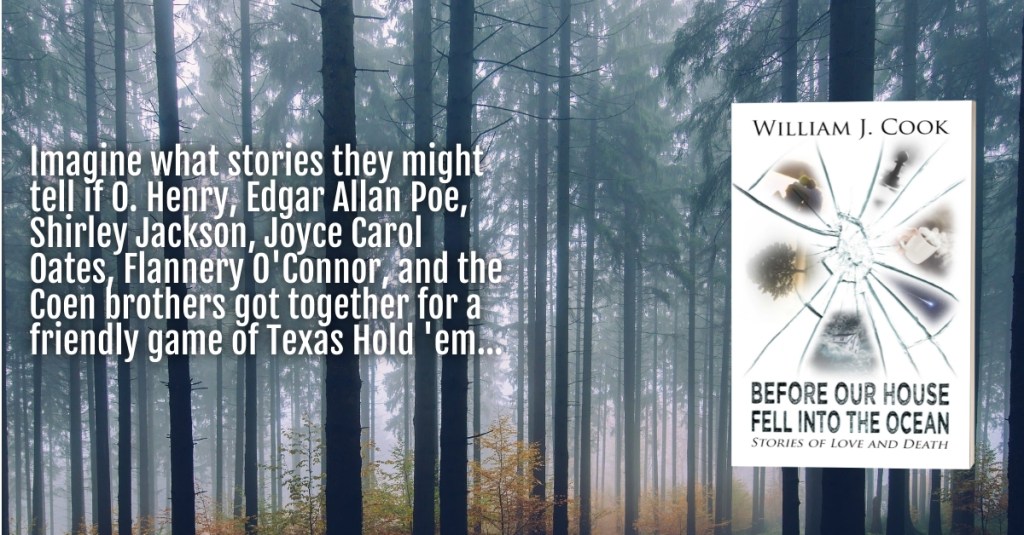
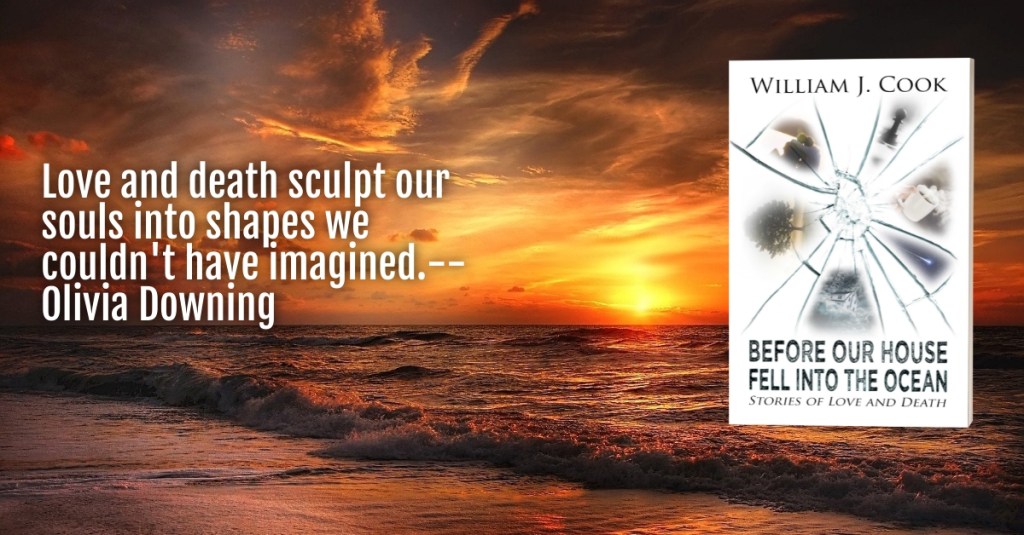
Here’s the new book cover, designed and created by Roslyn McFarland. Each image in the broken panes of glass is an icon from one of the stories. The pawn is from The Chess Player; the steaming mug from Coffee; the shooting star from Starfall; the falling house from Widowmaker; the oak tree from The Arborist; and the young lovers from Gargoyle. I’m still aiming for a late September or early October release. If you haven’t done so already, please subscribe to my newsletter to stay current with the latest updates and to learn about other indie authors whose books should be in your queue! Subscribe here.

An Interview with James M. McCracken, President of the Northwest Independent Writers Association

—How did you get started writing?

I guess you could say I was intimidated into writing. I’ll explain.

During a high school basketball game, I sat in the bleachers drawing a picture. The older sister of a schoolmate sat down beside me and asked me what I was drawing. I showed her and she wanted to know the story behind the picture. I told her there wasn’t a story. It’s just a picture. She said there had to be a story otherwise I couldn’t draw it. So, to get her to leave me alone, I made up a story and told her. She said, write it down. The next time I come to visit my brother, I want to read it. I said I would but had no intention of actually doing it.

A month later, I heard she was back and looking for me! I stayed in the dorm and didn’t leave until I heard she was gone. As I walked out of the building a van stopped in front of me. It was HER. She motioned me over and asked to see the story. I told her I hadn’t finished it yet. She said I had a month and she’d be back. She was bigger and stronger than me and a bit intimidating.

Once she left, I bought a ream of typing paper and 450 pages later, I still wasn’t finished with the story. I had figured out the ending and couldn’t finish it. My schoolmate’s sister never did read the story, but I was hooked.

I continued to write shorter stories but never let anyone read them because I was afraid they would think the story was dumb.

I love disaster movies and in 1975 I wrote a story about a 747 that crashed into the ocean and managed to stay intact, but sank. The story followed the typical disaster storyline – survivors trying to escape. I tucked it away with the rest of my stories and forgot about it.

Two years later, in 1977, I was walking past the bulletin board and noticed the movie ads. My jaw dropped when I saw the ad for Airport ’77. I thought if someone else could come up with the same premise as me, maybe my stories aren’t so dumb after all.

So, I began to take my writing more seriously. But I still wouldn’t let anyone read any.

—Tell us a bit about your craft. How do you begin a new book? 

I am what some people have described as a pantster, I don’t use an outline.

Most of my stories start out as a dream. When I wake up, I begin writing down the dream. Depending on the story, in order to keep the characters straight, I search the internet for pictures of people and use the pictures to keep my descriptions consistent.

I research the details in the story as they come up.

I try not to think too far in advance because I know myself and once I figure out the ending, it becomes more difficult if not impossible for me to finish. So, I am sometimes as surprised by the ending as you, the reader, are.  

—What would you most like your readers to take away from your writing?

Many of my stories deal with family and life, I would want people to take away that in life there is no such thing as “happily ever after.”  Life is a complex timeline filled with moments, some good, some not-so-great, some we cause by the choices we make and some that are unexpected. It’s those moments that collectively shape us into the people we are.     

—Can you give us a sneak peek at your latest work-in-progress?

I’m currently working on a new series tentatively titled, In My Mother’s House. It’s a soap opera inspired by a true-life family. The series covers eight years in the lives of the Holts beginning with an unexpected death and ending when the last of the Holt children moves out of her parents’ house.

The synopsis:

Life is finally starting to turn around for
Robert and Abigail Holt and their seven children.
Robert is working a steady job.
Abigail’s business is thriving.
The family is settling into their new home.
The future is looking bright.
Then one phone call sends them on a roller coaster ride
no one could have predicted. . .
or did he?

MURDER – HEARTBREAK – HOPE – JOY – LOVE – DREAMS

—Thank you so much for you time, Jamie. And for my readers, here’s the link to his website, where you can check out all of his books and more! James M. McCracken

Book Review: Raven’s Heart by Shawna Reppert

It is such a delight to be back in alternative Portland with the third book of the Ravensblood series. I find it compelling to get drawn into an urban fantasy set along streets I’ve walked down and places I’ve been. It’s that added layer of realism that lends such believability to a story of incantations, artifacts and magic.

The players are back: Raven, still working on his redemption by consulting for the Guardians, the police force combatting magical crime; his lover Cassandra, still cautious in light of his previous betrayal; the dark mage William, now wielding only a shadow of his former strength after the cataclysmic battle in the last book. But William has scoured the ancient archives and libraries and has discovered the whereabouts of long-forgotten artifacts of death magic which will restore his power and lay the city and the world at his feet.

As always in this series, the characterization is rich and textured, the emotional tone, complex and engaging, the action sequences, stunning and cinematic. I especially liked the ending, which is as wholly satisfying as the narrative that builds up to it. Ms. Reppert weaves her story like casting a spell, capturing the reader in her own brand of magic. And I will never be able to look at Vista House in the Columbia Gorge the same way again. For me, it will remain forever the setting for the climax of a novel which will haunt me for a long time to come. Here’s a link: Raven’s Heart

An Update and Some Teasers

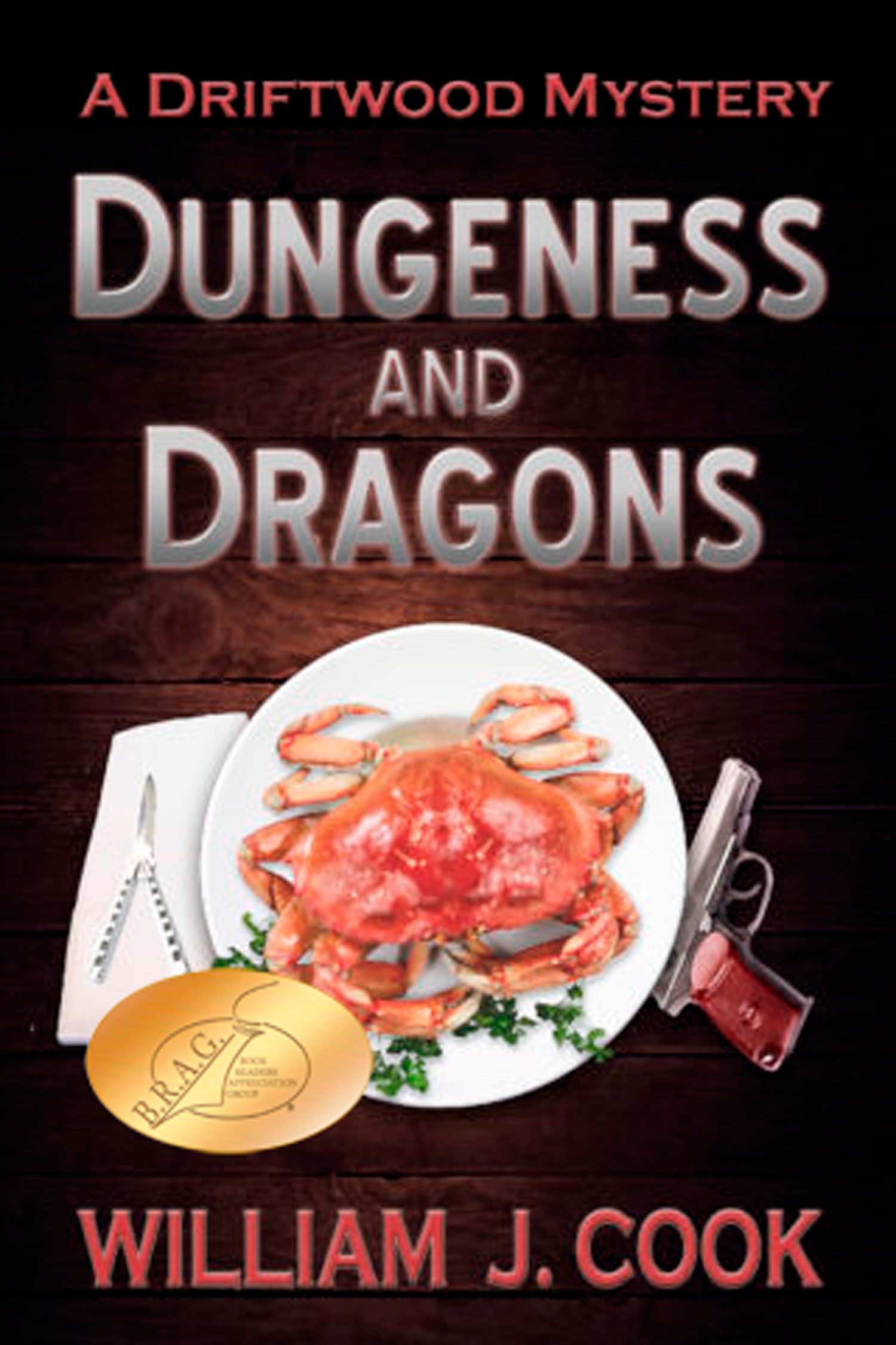
I am happy to report that Dungeness and Dragons has just been awarded an indieBRAG Medallion, a special recognition by the indie Book Readers Appreciation Group. Here’s the cover with the medallion on it:

I’m hoping that every little bit helps with marketing!

Meanwhile, I continue to work on my next volume of short stories. Here are a few beginnings:

Gargoyle

Whoever said, “Sticks and stones may break my bones, but names can never hurt me,” couldn’t tell his ass from a hole in the ground. At 13-years-of-age, Gary already knew this. A veteran of six different schools across Oregon, Washington, and Idaho, he knew names could be exquisite torture. The heir of a severe cleft lip and palate, and victim of a botched surgery, he had a face that bullies said could stop a clock. Gary Gargoyle they called him behind his back, always just loud enough for him to overhear.

A Better Mousetrap

You know you’re old when having a successful bowel movement after your first cup of coffee is reason to clap your hands and call up a 60s rock playlist on your sound system. So, I sat there, hands wrapped around my second mug, a stupid grin on my face, listening to Grace Slick’s defiant “Somebody to Love.”

Coffee

No, zombies don’t eat brains, but we’re particularly fond of coffee. Doctors say that something in the coffee slows down the demyelination of the nerve bundles responsible for the symptoms. I don’t understand anything about that. I only know that I crave the stuff.

Rain

“God’s tears,” Jeremy thought, as he sat at his desk watching the gray rain sweep across the empty lot behind the old white house and finally tap against the window in front of him. He looked at the Roman collar he had plucked from his black shirt and laid on the desk next to the letter he had just penned. What he was about to do could not be undone once set it in motion.

Widowmaker               

Before our house fell into the ocean, I used to enjoy watching my mother dance in the kitchen with her sisters every Friday evening. Because her sisters didn’t want her to backslide and get sick again, Aunts May and June would come over after work, each bringing a bottle of wine, “to start the weekend right.”

The Arborist

“Tree is telling stories again,” he said, his open palm resting on the gnarled bark of the enormous white oak in our front yard. He spoke in his characteristic monotone, his short blonde hair framing his ever-serious face. Upset that the tree would have to come down, my 11-year-old son Dax was spending most of his free time sitting under its branches, “listening” to what it had to say. It made me regret once again that I had made the comment aloud a month ago when we learned of the tree’s sickness. “Boy, if this old tree could talk, imagine the stories it would tell.”

I hope the Muse keeps moving! Target time for publishing is mid- to late summer. I’ll give you plenty of advance notice.

Hello, Again!

What can I say? I just don’t post much. I’ve all but weaned myself off Facebook–it began to feel like a black hole to me, sucking up time that I felt could be better spent elsewhere.

On a positive note, Diane Donovan, Senior Reviewer for Midwest Book Review, has just published her review of Dungeness and Dragons on her website, and it’s in the February edition of MBR. Here’s the link to it on her site: D&D Review

I’m feeling blessed right now–our electric power came back on yesterday at 4:00 P.M. after being out for six days due to an ice storm. Fortunately, our gas fireplace kept us warm, and no trees fell on our house. Of course, prayers go out to all those people in Texas who have it far worse than we did.

Although I haven’t been able to write this week, I hope to get back to it next week. I have drafts of several new stories for the upcoming volume, which is tentatively entitled, Before Our House Fell Into the Ocean. At this rate, publication probably won’t be until sometime this summer. In a future post, I’ll include some excerpts from the work in progress.

Stay well, dear friends.

Blog 5: “Resources for Writers,” by Connie J. Jasperson


Resources for Writers By Connie J. Jasperson


I write fantasy and science fiction. If one dares to write sci-fi, the technology must be grounded in cutting-edge science. Indulging in mushy theories is a big no-no for hard-sci-fi fans.

When science fails the “theoretically possible” test, it becomes magic, and magic is a trope of fantasy.

Writers of science fiction must become futurists. They must take what is theoretically possible and think ahead. Our task is to take what science says is conceivable and make it feel true and solid.

We all agree that reading one Wikipedia article does not qualify you as an expert in your chosen subject. To go beyond the surface, we must find websites that go more into depth or speak to the experts.

Once you know what you are writing about, you can mix it up any way you want. Here are a few articles I have found useful:

CommunicationsThis is the Future of Communication Thanks to Technology

TransportationWhat’s the Future of Transportation?

AgricultureHigh-rise Urban Farming

Waste managementThe future of waste: five things to look for by 2025

Resource management – Resources for the Future: website  https://www.rff.org/

The environment of any spacefaring society must be created of technology, or they would not be able to leave the safety of this world. Earth is the only world known to harbor life as we know it.

My current favorite way to bring humans to another world is through the use of generation ships. Entire colonies living for generations on a moon-sized ship, traveling through the cosmos, offers so many opportunities for drama. To find a plethora of ideas to investigate further, check out Futurism: Here is the Future of Interstellar Spacecraft.

I mentioned above that I write fantasy. In my case, writing a short story with a shamanistic element led me to investigate and study the writings of Joseph Campbell, Nancy Yaw Davis, and Frank Hamilton Cushing.

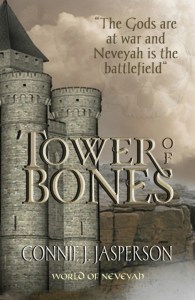
This little dip into traditional shamanism was a catalyst, kindling a world of ideas I could use in my Tower of Bones series, which began life as an RPG-game-based epic fantasy.

Whenever you can, speak to experts. Swords feature strongly in my work, and so I have forged connections with modern swordsmiths. My town has several fantastic blacksmiths who are glad to tell me what was possible in low-tech bladesmithing and what is possible with advanced technology. They’re always happy to talk about the history behind their craft.

And this brings me to the most fundamental aspect of writing—the nuts and bolts of grammar and story construction.

Readers assume writers somehow intuit grammar and are born knowing how to construct a readable novel. Nothing could be farther from the truth.

Authors must learn the fundamental physics of grammar and understand how a story arc works. These rules are the traffic signals that keep our work readable and engaging. Once you know the rules, you can bend them with authority, but some rules are absolute.

Ignore them at your peril.

We don’t like asking for directions, and grammar questions are like that. The grammar style manual won’t point out your ignorance—it’s just glad you cared enough to ask.

For me, writing-craft reference books must be in their hardcopy forms, but they do have online editions. I rely on The Chicago Manual of Style. It is written specifically for writers, editors, and publishers of literary and genre fiction.

It is the publishing industry standard. The editors at the major publishing houses own copies and refer to this book when they have questions.

I have worn out several copies of the Oxford Dictionary of Synonyms and Antonyms. If I had to choose between purchasing this book and a thesaurus, I would select the book of synonyms and antonyms.

The Chicago Manual of Style and the Oxford Dictionary of Synonyms and Antonyms are the anchors of my reference library. Besides those two books, these are a few of the books I keep in hardcopy and refer to regularly:

Oxford American Writers’ Thesaurus 

Story, by Robert McKee

Dialogue, by Robert McKee

The Writer’s Journey, by Christopher Vogler (essential)

The Sound on the Page, by Ben Yagoda

Rhetorical Grammar, by Martha Kolin and Loretta Gray

Damn Fine Story by Chuck Wendig (essential)

The Emotion Thesaurus by Angela Ackerman and Becca Puglisi (essential)

You will gravitate to reference books that may be different than mine, and that is good.

Education comes in many forms, and it’s up to you to take advantage of every opportunity to learn and grow as an author.

Coursera is a wonderful organization, who offer you an education for free. While you don’t receive a diploma unless you pay for the course, you will get the education you need. Certificates of completion are available at a lesser cost if that is important to you.

Price is the determining factor for most of us, especially now with the pandemic.

However, for the financially strapped author wanting to increase their knowledge of the craft of writing, an excellent resource is the website Writers’ Digest. They are also for profit, but they offer an incredible amount of information and assistance for free.

I write fantasy and science fiction, but I highly recommend you go to websites that specialize in writing romance novels regardless of what genre you write.

The giants of the Romance publishing industry want you to succeed so they can sell more books. To that end, they get down to the technical aspects of novel construction, and they give away their knowledge for free. This is knowledge that works for writers of all genres.

Go to Harlequin.com and see for yourself.

Harlequin’s website offers many excellent tools for getting your work out the door in a timely fashion—something I need to work on. They also offer tips on marketing your work.

Harlequin also gives tips on how to create a writing space and organize your day so you can get good writing time in and still manage your family. I used to do my writing in my kitchen on an old IBM Selectric that was parked beside the gerbil cage.

Let’s just say gerbils and typewriters aren’t compatible as neighbors.

Here, in no particular order, are my favorite sources of Online Information About Writing your Novel:

www.writersdigest.com

PBS.org/GuiltyPleasures/HowToWriteRomanceNovel

The Creative Penn

Harlequin.com

Creative Writing Now

I hope your writing journey has been as satisfying as mine, and that these sources of information are useful to you on the path to success. Keep writing and never stop learning.

***      ***      ***
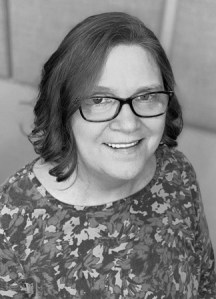
Connie J. Jasperson is a published poet and the author of nine fantasy novels. Her work has appeared in numerous anthologies. A founding member of Myrddin Publishing Group, she can be found blogging regularly on both the craft of writing and art history at Life in the Realm of Fantasy. You can find her books on her Amazon author page: http://bit.ly/CJJASPauthor

Follow Connie J. Jasperson on Twitter: https://twitter.com/cjjasp