An Interview With Indie Author Samantha Henthorn

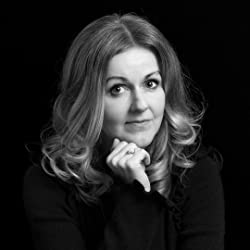
From her Author Central Page on Amazon: ” Samantha Henthorn was born in1970something in Bury, England. She used to be a nurse, now she is a disabled author… After a diagnosis of MS in 2005, Samantha eventually accepted early retirement in 2014. Looking for an occupation where she can work at her own pace, Samantha drew on her observation skills and imagination to start writing. Samantha often feels as though she is living in a sitcom and this is reflected in her style.

Will:  When did you first realize you were a writer? Do you have a particular schedule for writing, a special place for doing it, some kind of routine?

Samantha: I have to think about this one! I have a memory of owning a Matchbox Doll; I called her Maude and wrote the word ‘AUTHOR’ on her cardboard bed-slash-coffin. I was about five or six years old, and already searching for a pseudonym to deflect responsibility from myself (the doll was the author, not me). Many years later, the final post of my nursing career was community-based. We would train student nurses regularly. I would tell them that I was a bestselling author but gave it all up to pursue a nursing career, and my colleague would tell them he used to be in a band (also not true). It wasn’t until I eventually accepted early retirement for health reasons in 2014 that I started writing full time. I enrolled for a non-accredited creative writing course at the local library. Eight years later, I’m in the final year of my creative writing degree and have published twelve books.

Yes, I do have a routine, physiotherapy first thing in the morning, then I have a rest, then I write (getting dressed, looking on social media, eating and drinking are included in that time).

I have a few different places I like to write in my house but I do have an ambition to be ‘one of those writers’ who turns up at a pub and spends the day writing and possibly drinking – I know I wouldn’t get anything done though.

Will: The humor of your Curmudgeon Avenue series has really helped me get through this seemingly unending pandemic. Please tell us about the series. What was your original inspiration for it?

Samantha: Nice one Will! Curmudgeon Avenue actually started out as a short story. The tutor of the library course mentioned above tasked us with writing a five-hundred-word piece titled ‘Winter’. It was October at the time and as I drove home, not only was I greeted by falling leaves and autumn sun, I was reminded of the four-storey Victorian houses on the main road in Whitefield (North Manchester). I used to get stuck in traffic here on my way home from work and would often see lights on in the front rooms of those houses; people already at home enjoying their evenings. I wondered what was going on in their lives, and so I wrote the fictional version. The reason I used the word ‘Curmudgeon’ was that during the week, Mr Henthorn and I went to the supermarket. I hadn’t regained confidence in walking and was still using rollator wheelchair. A man pulled up beside us in the car park and started waving his fist at us – we had parked in the last disabled bay but he wanted the space. ‘What a curmudgeon’ I thought – and there was my title.

Will: In the throes of the pandemic, you participated with some other authors in a charity project, What We Did During Lockdown. Can you share with us what that experience was like for you?

Samantha: The pamphlet? What We Did During Lockdown is just four stories and one poem. How it came about was my response to suggestions of ‘what you should write is…’ During the pandemic, there were several charity endeavours here in the UK; 100-year-old Captain Tom Moore walking up and down his garden and so on. I posted to Facebook ‘now is your chance to put all those ideas to good use’. The friends who came forward weren’t the busybodies who had tried to tell me what to write. It was great fun, and everyone we collectively knew bought a copy. The money raised was (not much) donated to Bury Hospice. I still donate monthly, just in case anyone orders a copy. The next collaboration I have planned is with the multi-talented voice actor Lindsay McKinnon (more of this later).

Will: You’ve recently published a new novel, My Half-Sister’s Half-Sister. Can you give us an inside look at it?

Samantha: I wanted to write a story about witches for as long as I can remember (I am named after one!) My Half-Sister’s Half-Sister is set mostly in a pub near Pendle (notorious for the 1612 witch trials). Protagonist Epiphany hates her name and everything about herself. She is struggling to cope after the lockdown ends and just as she reaches her lowest point she is visited by Sadie, her half-sister’s half-sister. Sadie becomes the supporter that Epiphany (Pippa for short) never had; she eases all her woes and convinces her that her mother and sister are witches (and therefore left her out of the coven).

Things don’t add up with Sadie, for a start, Pippa is the only person to have seen her and soon, secrets are revealed and twists are turned. Pippa is shown to be immature for her age, and making little progress in life. Without giving anything away, one Goodreads reviewer wrote: ‘We are left to guess at what is real and what is not real.’ 

Pippa struggles with her mental health throughout the book, but it turns out to be more serious than first thought with scenes of heavy drinking and hospital admission. Pippa has a positive outcome from seeking help, which is the real reason I wrote this book. I am a retired RMN and I know how difficult it is for people to take the first step to recovery.

Will: What do you think about the writing of short stories? Your two collections, Quirky Tales to Make Your Day and The Queen’s Speech come to mind. Can you tell us about them?

Samantha: I think short stories are a great way to convey a seed that would be better suited to a quick read than a full-length novel. When I wrote Quirky Tales to Make Your Day, I had entered a few writing competitions, and eventually was longlisted a few times in the now defunct 1000 Word Challenge. Those stories ended up in the collection. The Queen’s Speech arose from the research I did for my 2017 novel 1962: (An uplifting tale of 1960s Lancashire). Not only did I read information, I spoke to my parents. Mum could not remember the Cuban Missile Crisis, but Dad told me he was petrified. They also spoke to their counterparts and fed any information about that year back to me. I also met a former school dinner lady who told me she had been trained to cut deep into the meat (in the event of nuclear fallout) to prevent poisoning children with radiation. ‘What difference will it make?’ she told me.

I have another short story collection planned with my talented colleague and wonderful friend Lindsay McKinnon. We met almost three years ago when Lindsay started narrating Curmudgeon Avenue.

Will: In your newsletter, you’ve spoken about the process of making your novels into audiobooks and the narrator with whom you’ve been working. What’s that been like for you?

Samantha: Audiobooks are a game changer. When I received the email from ACX to let me know that someone had auditioned to narrate Curmudgeon Avenue, I was overwhelmed. More so when I heard Lindsay’s voice. Lindsay McKinnon is multi talented, she can do any accent and she is hilarious. When I heard the first few sentences of Curmudgeon Avenue I nearly cried – the only thing that prevented me exploding with tears of joy was that I tried to place the voice. She sounded FAMOUS. She sounded like Joanna Lumley doing the Galaxy Chocolate advert (I hope that translates to the US – basically, the most gorgeous voice you’ll ever hear). Lindsay came to meet me, and I was even more astounded – she could have been from anywhere in the world, but Lindsay lives just up the road from me! We have become firm friends and as already mentioned plan to write a short story collection together. Lindsay has shared a few of her stories with me already. The world is in for a treat. This woman can make getting her gas boiler fixed into a hilarious and thought-provoking three-part drama. I’ll be adding my story about a woman who thinks Gene Simmons is her daddy and a few more. We did our first author event two years ago at Radcliffe Library just before the lockdown started, and the librarian commented in all her years in the book business she had never met a narrator and an author who got along so well. Obviously, Lindsay and I are meant to be the next big writing team to hail from the UK… and if you need any proof of that listen to the audiobook of My Half-Sister’s Half-Sister when it is published soon. It is the most delightful thing I have exposed my ears to in a long time. I have invited Lindsay along to help me answer this question by sharing her bio:

Lindsay McKinnon wrote performed and staged her first performances in the backyard of her Liverpool home at the age of seven. Following three years at Drama College, her career has included work as an actor, singer, writer and stand-up comedian. Lindsay continued to perform as a singer after returning from ten years living in Canada. In recent years, Lindsay has built a small studio and followed a long-held dream of being a voice artist/ narrator. This is how Lindsay first made contact with the brilliantly funny author, Samantha Henthorn. Lindsay and Samantha are a match made in heaven (or at the very least, North West England).

Will: Are you working on a new project that you might give us a glimpse into?

Samantha: Of course! I’m always having story ideas. At the moment I have a few poems on the go for the MS society and am in the final year of my degree meaning I will produce three pieces of fiction before May this year. After the course, I plan to write these narratives as novels. They will all be quirky contemporary fiction, two of which will be psychological thrillers.

Will: Do you have any advice you’d like to give to other indie authors?

Samantha: Yes I do. GO FOR IT, and KEEP AT IT. Remember to take your own advice before the overwhelming amount of instruction you’ll find on the internet. If you are looking for books on the craft (and I’m sure you’ve heard this), Stephen King’s On Writing and Joanne Harris’s Ten Things About Writing are superb books. The only other thing I’ll say is that reading, reviewing and networking with other indie authors is worth its weight in gold.

Thank you, William.

Will: Thank you so much, Samantha. I really appreciate your taking the time to share highlights from your author’s journey.

To learn more about Samantha and her books, click here.

An Interview With Indie Author L. Wade Powers

I’d like to introduce you to a favorite indie author of mine. From the bio on his website: “L. Wade Powers is the pen name for fiction written by Lawrence Wade Powers, a retired academic dean and professor emeritus of natural sciences. He’s the author of a textbook and several papers on hematology, monographs and papers on marine biology and animal behavior, and articles on the history of the Pacific Northwest, especially the Klamath Basin of eastern Oregon. Larry lives in Eastern Oregon with a beautiful wife, a very strange cat, and surrounded by four seasons of glorious nature, except for the damned midges.” 

Will: Tell us about your craft. How do you approach writing? Do you write every day? Do you develop an outline or are you what some call a “pantser?” How long have you been at it?

Larry: I write when I feel like it, which means on some days, or weeks, not at all. It might be morning after coffee and breakfast, late afternoon, or late at night when I get strange looks from our cat. I don’t use time or word quotas for measures of productivity. It’s not that these approaches are wrong, but I just have too much fun being sporadic and lazy. Some novels may start with an outline, subject to extensive revision, but most short stories start with an idea or an opening paragraph, what I call the “Ray Bradbury approach.” I fooled around with some ideas and put them away about fifteen years ago, but didn’t start writing fiction until I retired in 2013. It is only since 2017, however, that it has been a truly active pastime.

Will: Your first novel, The Home: One Year in a Children’s Institution, is a different take on the coming-of-age story. What was your inspiration for it?

Larry: Like many beginning writers, I began with what I know best, a hybrid of my real life experiences combined with flights of fancy. I spent six months in the Sacramento Children’s Home in 1956–57. Many of the characters are based on real people (most but not all of the names are changed). About half of the incidents happened (social doings at the junior high, the snake men, the rec hall parties, the flirtations and sexual encounters). Other events are figments of an overindulged imagination.

Will: You have two amazing volumes of short stories, Falling in Love and Other Misadventures, and Confronting the Boundaries: short stories real and unreal. Unlike many “post-modern” stories, yours have plot, as well as a beginning, a middle, and an end, not to mention a cast of extraordinary characters. Tell us about them. What are your thoughts on the “genre” of the short story?

Larry: Some of the stories follow real life occurrences faithfully (e.g., “The Trove”), others are mostly real (“Lawnmower Ted”), others completely off of my inner wall (“The Shroud”). Diverse characters have always fascinated me, in addition to the growing and learning scenarios we all experience. I was a nature nerd and slow to arrive at the threshold of sexual awareness. I also didn’t get a driver’s license until I was twenty, an unforgiveable crime in California. The awkwardness of confronting maturity and its myriad obligations and expectations runs through a number of my musings (“Odometer Moments,” “The Omaha Two-Step,” “Fig Newton”).

      I believe that depicting character is a challenge in short stories because the need for brevity restricts the development of back story. The best short story writers get right to it, bang, and you’re immersed in the tale. Choose words carefully, waste no space. Some of my favorite writers are Edgar Allan Poe, Ray Bradbury, Margaret Atwood, Karen Russell, and Joyce Carol Oates.

Will: I think I’m still chuckling after reading The Party House: Texas Gulf Coast Schemes and Dreams. How autobiographical is the tale of a graduate student studying fiddler crabs for his doctoral dissertation?

Larry: The Party House is based on my time as a graduate student at the University of Texas Marine Science Institute in Port Aransas. The setting, including the community bar and social club were real, as were some of the characters, but as with The Home, I added fictional elements. I did study fiddler crabs (thus, the cover with a crab and a glass of beer), received my doctorate, and took my first jobs in New York City as a professor at City College and a research associate at the American Museum of Natural History. The craziest events depicted in the novel actually happened.

Will: You’ve recently ventured into historical fiction with your book, New Albion Sunset: Drake’s Lost English Outpost in North America, 1579. While it is a novel, I understand you did extensive research and present an interesting hypothesis about Drake and the Golden Hinde. Give us the juicy details!

Larry: The reason for placing Drake in the Pacific Northwest, specifically British Columbia, Washington, and Oregon, rests on the studies and publications of several people: Bob Ward of Newport, Oregon, Garry Gitzen of Wheeler, Oregon, and Melissa Darby (Thunder Go North). They and many others have recently presented evidence that Drake’s long lost Novo Albion occurred well north of California, despite commercial interests during the twentieth century to place his anchorage in the San Francisco Bay Area. I am convinced the current scholars and investigators are correct and the appendix to the novel includes supporting materials: maps, references, and historical chronologies that support the theme of a northern landing, a missing ship, a fortune in silver, and the fates of about two dozen men left behind as the Golden Hinde returned to England. I now have an extensive library on Drake and the Elizabethan times, but we won’t know the truth of these competing claims until hard archeological evidence is uncovered. The location of that evidence is described in the appendix.

Will: Your latest novel, The Sagebrush Hotel Tontine: A Tale of Treasure and Treachery, is a character study of a group of poker players who come upon a trove of gold they can’t dispose of right away. They make a survivors’ agreement—a tontine—that later morphs into a “dead pool”—last one standing takes it all. Where did that story come from?

Larry: I play poker, small stakes, live, not online. My dad taught me the game when I was twelve and I like the action, the fun, the mystery of the competition around the table. There are a lot of metaphors for real life situations, and I trotted out a few of those for the novel. The novel started as the story of a drifter returning to a small town to reclaim a shared treasure. I focused on the old hotel and the memories it invoked in Johnny, my male protagonist. I set it aside for over two years before creating the prologue about the gold bullion. The idea of a tontine has always fascinated me. As explained in the author notes following the novel, tontines started as insurance and investment mechanisms in Europe a few hundred years ago. Relating a tontine to a dead pool provides the mystery for a group of characters, not all of whom have good intentions. The woman pictured on the cover represents Brandy, my female protagonist, so there is a bit of romantic intrigue also thrown into the pot.

Will: Can you give us a sneak peek at your current project?

Larry: I am currently working on a novel with the manuscript name of SurrogaCity. It stands for Surrogate City, a future community (former San Francisco) in a world-wide gynocracy, a global cooperative governed by women. Most men (98%) thirty years from now are sterile and the ones who aren’t are maintained in reverse harems to protect them and the future of the human race. Conflicts abound as women try to decide whether to rely on artificial insemination and long-term sperm storage. There are rebels, men and women, outside of the domed cities who oppose the new order, but climate change is being addressed and there hasn’t been a war since women have assumed command.

Will: Wow! Sounds fascinating! Do you have any more comments about your craft or your road to publishing? Is there any advice you’d like to give to new indie writers?

Larry: Writing as an indie author is challenging in many ways, but the advantages of control and full royalty payment, in my opinion, compensate for the loss of commercial marketing associated with a traditional publisher. I can still receive full and competent design and editing services, which I pay for, but have the book out in stores and on the Internet in four months, instead of a couple of years. My advice? Explore the possibilities, compare costs (financial and labor effort), and believe that in this publishing era, you can be successful. There is a tremendous community of indie authors to help, offer advice, and provide encouragement. Of course, the best advice for any would-be writer is always, READ!

Will: Larry, thank you so much for taking the time to share your insights with us. It’s such fun to get a glimpse of how a writer creates the books we come to enjoy so much. To my readers, click here to zip over to Larry’s website and check out his whole bibliography. I wouldn’t be surprised if you find your next favorite book there!

An Interview With Indie Author Michael Gardner

Michael Gardner, whom I interviewed for my December newsletter, is an indie author from New Zealand. I’d like to introduce him to you by reprinting the bio he’s posted on Goodreads.

1.Why do I write? I write because I have an obsession with writing which borders on a mental disorder. I’ve often wondered if I can get medicated for this condition, but it’s much cheaper and easier to spend time at a keyboard.

2. How long have I been at it? I’d love to tell you I had some magical writing awakening, but the truth is I’ve been writing since I could combine a noun and a verb to form a sentence. Not sure when that was or what I used. Probably the red crayon on the kitchen wall incident. It was a good story, but not well-received.

3. What is my inspiration? I’m inspired to write so I don’t have to find another pastime. I’ve tried stamp collecting, golf and other forms of self-harm, and writing seems to be the least destructive to my mental well-being and the environment. I also have an allergy to churning out books in a specific genre, which makes me a difficult author to follow. Sorry about that.

4. Do I have a pet, is it cute and what’s its name? I do have a pet. My wife thinks it’s cute. It’s actually the embodiment of evil with a soft coat. Amongst other names, I call it the Anti-Bob. If you’d like to know why, read The End and Other Stories.

Will: As a fan, I was delighted when you gathered eight of your separately published stories into one volume, Outside Inside. Do you have some “back story” about that process and those stories in particular that you can share with us? What do you believe are the elements of a good short story?

Michael: They all come from completely different places, which sounds contradictory considering they all came out of me. For example, Henry & Isa started as a dream. Goddammit, Larry! was inspired by a glitch in a video game I love to play. And Alexander Rollins Must Die came to me fully formed as I was going to the supermarket. Don’t ask me what grocery shopping has to do with a black comedy metafiction story.

I guess the point is that inspiration strikes us in unusual and unexpected ways. We have to tune in to those moments and embrace them. Or find a really good therapist. Short stories are an interesting beast. For years, I had the ridiculous notion that a short story was what people wrote if they weren’t good enough to craft a novel. It’s absolute nonsense. In many ways short stories are easier than novels, but in many ways they’re much harder.

With a novel, you have time to explore the story in depth, chase various ghosts, sidetrack down mysterious pathways. With a short story, you have to leap into the deep end of the pool and hope you can swim, or that the pool isn’t filled with hydrochloric acid. It demands finding the protagonist’s voice, conflict and goals as quickly as possible, then chasing them relentlessly to a conclusion in the most compressed form of storytelling you can muster.

Will: Your novel Rescue One is a page-turning thrill ride. Please tell us about how you created that.

Michael: I always wanted to be a writer. But for many years, I had a bee in my bonnet about it. Writers felt like mystical, elusive creatures, and I couldn’t quite see myself in that role. The early moral of the story is: follow your dreams, don’t listen to that voice.

Anyway, cutting a long story short, I spent five of my best working years (before becoming a self-employed writer) at my local rescue helicopter service. I flew a desk, not the chopper. But the rescue crew were an inspiring group of men and women who have left a mark on me for life.

One year, I was asked to run the strategy meeting. I never take a conventional approach to anything, so as a warm-up, I made everyone play a party game called ‘And the consequence was…’ You give each person a sheet of paper and a pen. Each person writes a line from a predetermined set of story ideas. You fold the paper over so each line is hidden and pass it to the next person in the circle. I changed the story ideas to imagining what the rescue helicopter service would be like one hundred years into the future. At the end of the session, you unravel the paper and read the story. Everyone was weeping with laughter.

And so I decided to ignore that voice and start writing a book, which became Rescue One.

Will: Your droll sense of humor is practically a trademark of your writing. Does that humor come easily for you? Does it have roots in your family?

Michael: My family are a very sensible bunch of people. I’m the one with the droll sense of humour. I like to laugh and give other people a good laugh too. From a writing perspective, you can create very powerful moments if you write funny scenes and deliver them deadpan. It’s simple juxtaposition really, layering contrasting ideas into scenes to give the story different nuances.

Will: You are a master at developing quirky characters to inhabit your stories. Are there some “tricks of the trade” you might share with us about how you do that?

Michael: I’m a big fan of the antihero. All my protagonists are antiheroes, even the high-achieving ones. For me, flawed characters are more human, relatable and interesting to write. I think it’s important to love all your characters, including the villains. If you enjoy writing them, that enthusiasm comes through on the page for the reader.

Will: Do you have any advice for other indie authors, things you’ve learned along your own creative journey?

Michael: Write because you want to tell other people your story. Do it for no other reason than that. If you write with pure determination to produce a good book, with no expectation of getting anything in return, you’ll do your best work.

And, as above, don’t listen to the voice.

Will: Thank you, Michael. My readers and I appreciate your taking the time to speak with us.
Catch up with Michael and all his books by clicking on his picture above.

Book Review: Midnight in Silverton by Adam Copeland

“Maybe it’s just that vibe any decent bookstore or library has. A kind of magic. Perhaps it’s the clocks that make time more visceral, like something you can feel on your skin or get tangled in your hair.” That description of entering the Books ‘N’ Time Bookstore in the thriving little community of Silverton, Oregon, made me sit up and take notice. What kind of book is this? With its subtitle, I had expected some kind of horror story, perhaps even ghosts? But Midnight in Silverton is so much more than that. Yes, there are “ghosts” of a kind, and there is a serial killer on the loose, but this is a literary work with in-depth character development, brilliant turns of phrase, profound meditations on loss and regret and the poor choices all of us make. The introspection is unnerving at times, exploring a mind pushed to the breaking point. Is it PTSD? Schizophrenia?

Like a Mayberry gone off the rails, the “quaint” Silverton slowly reveals its underbelly—biker gangs, drug-trafficking, domestic abuse—as the narrator returns to his parents’ home to try to recover after losing his job, his finances, and a string of broken relationships. But as Thomas Wolfe famously wrote, “You can’t go home again.” The demons and nightmares persist. Our narrator’s flaws are as firmly attached to him as his shadow. In fact, the novel may be read as an exploration of what Carl Jung called the shadow—the unknown dark side of the human personality nestled in the unconscious. That shadow is a low bass note, increasing in volume and menace as the story unfolds.

Despite the darkness, there is humor here as well, the kind of humor that is only possible in the context of enduring family bonds, and the love and support of life-long friendships. Midnight in Silverton is a kind of love letter to a small town, an homage to a real Oregon community that may make you want to pay a visit. It’s a novel not to be hurried but to be savored, as you might a fine meal enhanced by a perfect Pinot Noir.

A Goodreads Giveaway

Goodreads Book Giveaway

Before Our House Fell into the Ocean by William J. Cook

Before Our House Fell into the Ocean

by William J. Cook

Giveaway ends November 20, 2021.

See the giveaway details at Goodreads. Enter Giveaway

Sending well-wishes to all my friends on this fine fall day. I’m trying an experiment with Goodreads—giving away 100 copies of my latest book in a lottery sort of way. Enter the giveaway today!

And here’s a new update: Nye Beach Book House in Newport is now carrying my titles, and later today they will be on the shelf at Books N Time in Silverton. For Salem residents, they can be found at Reader’s Guide in West Salem. Ulrike Bremer, Chuck Tauer, and Kim Mainord, respectively, run these small community book stores and deserve your patronage. Please check them out!

Little by little, inch by inch!

Terminal Velocity: Musings on the Station Nightclub Fire

This week I watched a 48 Hours episode on CBS about the 2003 fire at the Station, a nightclub in Warwick, Rhode Island. One hundred people were killed, and another two hundred were injured. When I had first heard about the tragedy eighteen years ago, I remember telling myself, “If I were still living in Rhode Island, I’d be dead now.” Let me explain.

I moved to the little community of Riverside, Rhode Island, just south of Providence, in June of 1974, fresh out of graduate school at the State University of New York at Albany. My former wife and I rented a duplex on the narrow peninsula called Bullocks Point, and a few years later we purchased a house right on the banks of Narragansett Bay, where we remained until 1989, when we moved to Oregon.

The house was old but comfortable, and we remodeled it piece by piece over the years. A side porch was converted into a bedroom for two foster adolescents. The back porch became a kind of office/playroom with a wood-burning stove. A new deck in back became the best place to look out over the bay, breakfast coffee in hand, and watch sailboats in the summer and water fowl in winter.

Directly across the bay was the little town of Cranston, and south of that was Warwick. It was pleasant to watch the city lights on the water after sunset, and especially fun to watch the traditional party bonfires on the beaches up and down the bay on the night before the fourth of July.

I confess, my tastes in music back then were quite juvenile. In fact, I was a bit of a metal head when the “hair bands” were so popular. I loved MTV and stayed up late on the weekends to watch Headbangers Ball. I saw AC/DC, Judas Priest, Whitesnake, and Great White in concert. (Another confession, I often “hired” a nineteen-year-old who lived down the street to accompany me to concerts. That way, if I got a ribbing that I was the oldest guy at the show, I could claim that I was just here treating my teenage neighbor in thanks for some good deed he had done for me.)

Bottom line, if I had been in Riverside in 2003, I would have gone to see Great White at the Station. It would have been a walk down memory lane, a tip-of-the-hat to a bygone decade, a little sip at the fountain of youth. I would have been right in the thick of it, hemmed in on every side, unable to escape when the terror erupted.

The phrase terminal velocity popped into my mind as I was thinking about all of this. That’s the fastest speed an object can attain if it’s falling to earth, because air resistance prevents it from accelerating further. A skydiver free falling from a great height reaches terminal velocity, about 120 miles per hour, in about twelve seconds.

But aren’t we all “falling to earth?” Perhaps terminal velocity can be applied to the arc of our lives. I wonder if the individuals caught in that holocaust in Warwick had lived long enough to reach their own personal terminal velocity. It feels like I was granted a reprieve, a stay of execution, by moving out west when I did. I was given the time—the grace—to reach my own terminal velocity. Have I used it wisely? As I remember the conclusion of Spielberg’s Saving Private Ryan, the older Ryan’s words haunt me.

And I know I’m falling as fast as I ever will.

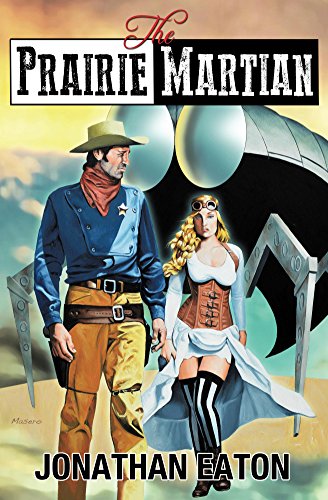
Book Review: The Prairie Martian by Jonathan Eaton

Nope, we’re not in Kansas anymore, or Wichita for that matter. We’re in New Halchita, not much more than a carbuncle on the back of the western plains. The dusty little town would have gone completely unnoticed for another century had it not been for the visitation of the “giant cast-iron cockroach the Martian (if that’s what it was) rode in on.”

Author Jonathan Eaton’s novels are not “your grandfather’s westerns,” as his later books, A Good Man for an Outlaw and Outlaws and Worse, so definitively prove. The Prairie Martian is no exception. Told with Eaton’s droll, pitch-black humor, it’s the story of a Martian who calls herself “Nancy,” come to earth for God-knows-what reason. But this is post-apocalyptic earth in the 25th century, still recovering from the great war (the GIW, but no one can remember what the letters stand for). It is earth like the mid-1800’s, before electronic technology, because orbiting high overhead are the last bitter words of advanced civilization: “lagamachies”—satellites programmed to obliterate any trace of higher technology.

Presiding over this Grand Guignol is Sheriff Frank Westfall, former “tick-juicer” (Oh, Mr. Eaton, what nightmares you must suffer!). For those of us old enough to remember, think James Arness, only taller.

Author Eaton draws us in with his lean, understated prose. The story is engaging, even thrilling at times, the world-building convincing, and the characters memorable. I give it a very enthusiastic thumbs-up.

A note to my friends: I’ll be interviewing Jonathan Eaton in my November newsletter, and he is every bit as entertaining as his novels! If you haven’t subscribed yet, please use this link. And by all means share the link with your friends so we can grow our group. No spam, no clutter!

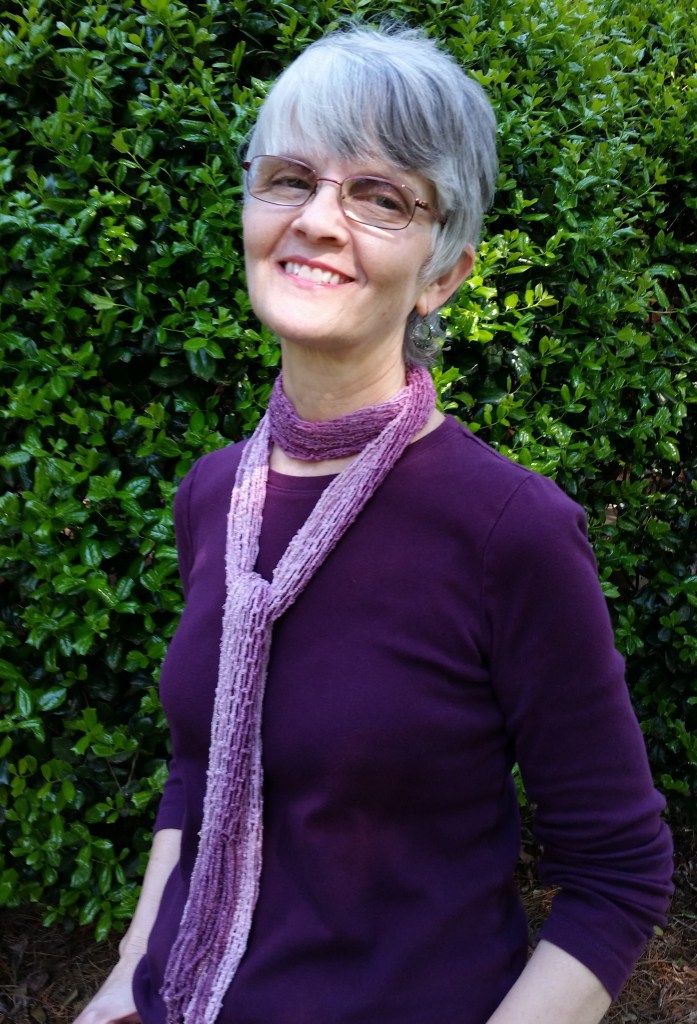
An Interview With Indie Author Connie Lacy

Connie worked for many years as a radio reporter and news anchor, with a couple of brief forays into TV news along the way. Her experience as a journalist shows up in some of her novels. She also dabbled in acting in college and community theater. She uses those experiences in some of her books as well.

Her novels are fast-paced stories featuring young women facing serious challenges set against the backdrop of some thorny issues. She writes time travel, magical realism, historical fiction and climate fiction – all with a dollop of romance.​

Bill: Connie, how and why did you become a writer, and can you tell us about your creative process?

Connie: When I was in 5th grade, I read The Little House series of books by Laura Ingalls Wilder. I decided I should be a writer too. I started with my biography. After filling a page and a half, I couldn’t think of anything else to say. Ha!  I transitioned into writing angsty, teenaged poetry, then switched to short stories at 15, tried writing children’s books, YA novels, and eventually settled on writing adult novels. My creative process involves channeling my concerns about a variety of issues, including social injustice, personal failures and climate change. To shine a light on a topic, I use it as a backdrop for my story. Racial injustice is featured in several of my books—A Daffodil for Angie (Young Adult) The Time Capsule,and The Going Back Portal. Then I work on building a main character to inhabit that world. I get to know her first, then outline a story arc for her. That changes sometimes as she interacts with other characters. But I always know how the story will end before I begin writing. My first draft always stinks. It’s messy, inconsistent and redundant. I go through many, many re-writes. The revision process always generates better ideas for scenes, and in my forthcoming novel, created a different ending. That’s the first time that’s happened.

Bill: Time travel figures in several of your novels, but not in a science fiction kind of way. Talk about that.

Connie: I’ve always liked time travel stories. Ideas pop into my mind. The Time Telephone grew out of this exact thought: what if you could call someone in the past on a time telephone? The novel also grew out of a situation within my extended family where a parent abandoned their child. So I combined the two—writing about a teenage girl grieving her mother’s death, lamenting the fact that even when her mother was alive, they never had a real mother-daughter relationship. There’s that element of fantasy, but it also deals with the very real-world issue of child abandonment. In The Going Back Portal, a young woman’s grandmother appears to be descending into Alzheimer’s disease, talking about a Cherokee Indian woman living in the woods behind her country cottage. But it turns out there’s actually a time gate that leads the protagonist to 1840 where a Cherokee woman is struggling to survive the brute who’s taken control of her land and her life. The novel delves into the wrongs perpetrated against Native Americans. That’s what appeals to me – not the sci-fi type of time travel story.

Bill: Would you describe several other of your books?

Connie: My concern about climate change prompted me to write a trilogy set a hundred years in the future against a backdrop of runaway global warming. I wanted the story to be romantic and exciting. So I mixed all of that together to produce The Shade Ring TrilogyThe Shade Ring, Albedo Effect, and Aerosol Sky. My novel, VisionSight,        is about a young woman who can see the future, including the unexpected challenges that “gift” brings. The novel I’m publishing this fall is another time travel story. This one is set in the 1850s and features a suffragette living with an abolitionist family in the Philadelphia area.

Bill: You just finished producing your own audiobook version of The Time Capsule. What was that like for you?

Connie: In a word: EXHAUSTING! I worked in radio news for many years. With all my experience in front of the mic and my experience editing, I foolishly thought “How hard can it be?” I was humbled by how hard it can be. Delivering the news is nothing like narrating a novel. There are character voices to do. Even if you don’t want to get too carried away, you still have to differentiate between characters. Of course, the sheer length of the novel is a big factor. The audiobook version of The Time Capsule is 9 hours and 21 minutes! Agh! Then there’s mouth noise to deal with. Multiple takes of every paragraph to hopefully get a usable take, often editing a sentence from one take into another paragraph take. The editing was a fulltime job. And don’t forget the technical issues, including hiss and extraneous noises (airplanes flying overhead,

barking dogs, etc.) I had to get up at 4:00 a.m., go down to the basement to my makeshift recording booth so I could record for a couple of hours before all the noise started. Will I ever do another audiobook? I’m still pondering that question.

Bill: What advice would you give to other indie authors?

Connie: There are lots of blog posts and newsletters out there with specific advice on publishing, plotting, character development, pacing, etc. I don’t want to get into all of that. I think a good piece of advice is to read a lot. Read the kinds of books you want to write. Notice what the good authors do—how they transition, how they handle dialog, how they develop character. Think about those things when you notice them and imagine how you might adapt those techniques in your own writing. It can also be educational to read poorly written books, although not as enjoyable. In that case, you might notice things you, yourself, never want to do—like using a character’s name

over and over and over and over when he/she, him/her would be better.

Thanks for having me, Bill. BTW—here’s my website.

A note to my readers: My interview with Connie first appeared in my October Newsletter. If you haven’t subscribed yet, here’s the link. I promise it’s spam-free, and I will not clutter your inbox!

A New Book Review

I am truly excited, and the image above is a picture of my head exploding! Diane Donovan of Donovan’s Literary Services and the Midwest Book Review has just sent me her review of Before Our House Fell into the Ocean, and it’s so amazing I have to post the whole thing here. Here’s what she had to say:

Before Our House Fell Into the Ocean: Stories of Love and Death is a literary collection of short works that each center on a bizarre character’s dilemma. It is highly recommended for literature readers seeking outside-the-box representations and scenarios.

Take “Bad Seed,” for example. Here, a depressed husband faces a fed-up wife who is tired of his attitude and ongoing regrets over “the biggest failure of his life,” and who walks away from the seminary and the priesthood to become a psychotherapist and husband.

What she doesn’t know is that the demons of the past and the decision that causes him to hear voices and suffer are alive and well in the present. A visit to the source of this haunting reveals its roots. It also provides the narrator with a different choice.

William J. Cook writes these descriptive lives with an attention to description and detail that draws readers into each life: “The dragon cannot be slain, only kept at bay. A deep weariness washes over my body and soul, like a receding tide sweeping debris from the beach.”

Belief, vows, faith, and Church enter many of these works, which also offer astute psychological inspections from diverse perspectives. One example lies in “Coffee,” in which a zombie longs not for flesh, but coffee made by the “sorceress of coffee” barista Suzie, who has a special gift. The sense of humor over Joey’s dilemmas as a zombie comes to life: “Nobody wants to date a zombie. And nobody wants to stay married to one, either. Righteous types call us the New Lepers.”

The ironies of experiences which move into the territories of acquittal, social dilemma, and psychological transformation contribute to writings which are compellingly unique.

Before Our House Fell Into the Ocean is a collection designed for the literary thinker.

Its inspections and haunting stories of souls on fire in different ways will find a home in any literary collection, and in the hearts and minds of readers who enjoy twists of plot that leave them thinking.

Pre-Order Sale!

The countdown is underway! On September 30 the Kindle version will be released, and I feel that my generous supporters need something back. I’ve just reduced the regular $3.99 price to $0.99, and Amazon assures me that anyone who pre-ordered at the regular price will be billed at the new sale price instead. (Whew! That spares me the task of having to track down early buyers and give each of them $3.00 back!) If you haven’t already purchased it, please take advantage of the sale here. If you’re a “hard copy” fan who craves the feel and smell of paper, here’s the link to the paperback. BTW—any of you who live locally, I would be more than happy to make a “house call” and come to your home to sign your copy!

On other fronts, my audiobook narrator Joel Zak has submitted the “retail sample” of D&D to ACX for evaluation. If it passes muster, he will proceed full-bore with recording the Driftwood Mystery. Here’s another BTW—for fans of that book, there is an epilogue in the new book of short stories. I couldn’t help myself!

And may I say a few words about being an indie author and trying to market your books? I don’t mean to be a whiner, but it’s freakin’ hard! Truth is, when you publish on Amazon, unless you’re already famous, you’re a needle in a humongous haystack. I’m posting on Instagram and Facebook, taking out ads on Amazon and BookBub, but have yet to create any “buzz.” If you’re a fan of my writing, I don’t think you’ll be disappointed with the new book. And if you’d care to share that with your friends, I would be truly grateful.

Until next time.