It can be difficult to approach a book as it was intended to be read and not drag with us all our “modern sensibilities.” We are probably doomed to experience everything through the lens of our current beliefs, like it or not. This results in criticizing what went before as if the author or the artist or the sculptor “should have known better.” Statues get torn down, books get banned, art gets condemned. “So it goes,” as Kurt Vonnegut famously said.
I just finished rereading The Stranger, by Albert Camus, a book I haven’t looked at in more than fifty years. True confession: I was struck by the cringe-worthy scenes of domestic violence and animal abuse in the first half of the book, scenes I had never recalled from my reading the book in my youth. What I did remember was the poetic intensity of the concluding chapters of the novella, when the protagonist Meursault is in prison awaiting execution for murder. At one point he says, “From the dark horizon of my future a sort of slow, persistent breeze had been blowing toward me, all my life long, from the years that were to come.”
Against his wishes, Meursault is visited in his cell by a priest, but finds “…none of his certainties was worth one strand of a woman’s hair.” He is so provoked by the chaplain, that Meursault grasps him about the neck and shouts his rage at him. When the priest finally leaves, Meursault says, “It was as if that great rush of anger had washed me clean, emptied me of hope, and, gazing up at the dark sky with its signs and stars, for the first time, the first, I laid my heart open to the benign indifference of the universe.”
But it was the final sentence of the book that had so disrupted my quiet seminary education all those years ago. Interestingly, I’ve learned that newer translations have changed the wording to bring it more in line with the original French. The version I had read was the old one by Stuart Gilbert, who apparently took some poetic license in his rendering of cris de haine. That phrase is literally “cries of hate.” Unfortunately, we so overuse the word “hate” in English (“I hate that movie. I hate that hair style.”) that we’ve eviscerated the power it has in French, so I still like Gilbert’s translation: “For all to be accomplished, for me to feel less lonely, all that remained to hope was that on the day of my execution there should be a huge crowd of spectators and that they should greet me with howls of execration.” That still gives me chills!
Currently, I’m slogging my way through The Myth of Sisyphus. It’s pretty dense, and my philosophic chops aren’t as honed as they used to be, so it can be hard going! The Plague made great reading during the pandemic. Its lucid humanity can be a bracing tonic for these divided times. I think I’ve repeated my favorite line from that novel many times before: “…a loveless world is a dead world, and always there comes an hour when one is weary of prisons, of one’s work, and of devotion to duty, and all one craves for is a loved face, the warmth and wonder of a loving heart.”
If you’re new to Camus, you might want to try starting with The Plague or with a shorter work like The Fall. He was also a marvelous essayist, and I’ve always been fond of “Nuptials at Tipasa.” After JFK’s death, brother Bobby Kennedy immersed himself in Camus, so you’ll be in good company.
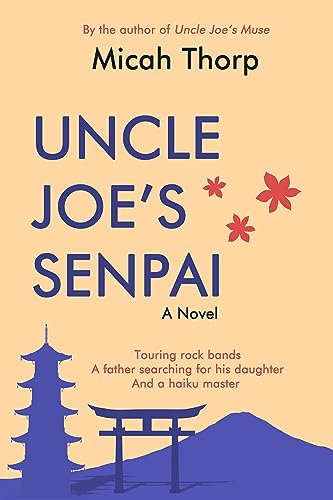
In Thorp’s follow-up to his masterful Uncle Joe’s Muse, the boys—and Allison—are back in town. But things have changed for the better. They play concerts in big arenas instead of little seedy dives, they have a recording contract and a full-time agent, they’re going on tour in Japan. If only Ian can figure out who of the all-female punk rock band Stygian Teal is the daughter he never knew he had. Perhaps he’ll find out if Uncle Joe’s Band signs up Stygian Teal to be their opening act in Japan.
As with Uncle Joe’s Muse, Uncle Joe’s Senpai tells two entangled tales, that of the band’s (mis)adventures and that of the mysterious nomadic poet Joji Ojisan, who treks across Japan leaving a trail of haiku poems in his wake. Along the way, Joji meets Satoshi Tajiri and inspires him to develop the Pokémon game franchise. He encounters Hayao Miyazaki and helps him create what becomes the classic animé “My Neighbor Totoro.” He provides encouragement for a young Masako Owada, the woman who will become empress of Japan. And he helps some American Marines catch lobsters for dinner.
A note of caution: don’t read this book in a place where you have to be quiet, like a library or the middle seat of an airplane. Your laughter may disturb those around you. Thorp’s novel is a comedic gem, seasoned with just the right amount of insight and wisdom so it lingers long after you’ve finished.
Reading Uncle Joe’s Senpai is like eating oysters with a fine Chardonnay—you savor every delicious morsel and you don’t want it to end.
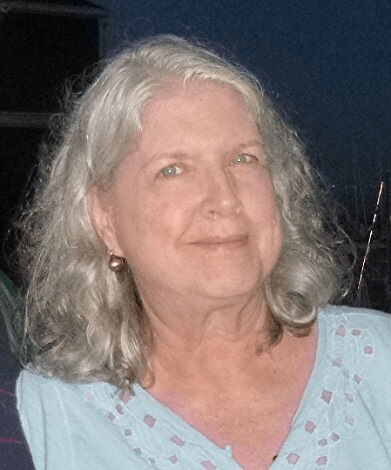
I have the pleasure of introducing to you Alicia Butcher Ehrhardt. Her Amazon page tells us: “A voracious reader, she had always intended to write fiction, and, now retired, dedicates her whole life -when not spending time with her husband, family, and community – to exploring the concepts of integrity in relationships, and the psychological questions of why people do what they do and make the choices they make, including their life partners.”
Alicia writes transcendent prose, defining for me what a contemporary literary novel should be. I simply cannot recommend her books highly enough. In her in-depth interview, she talks candidly about herself and her art.
Will: Alicia, can you tell us something about your writer’s journey? When did you discover you were a writer and had a story to tell?
Alicia: My parents moved us to Mexico City—my next younger sister and me—when I was seven, and I read everything I could get my hands on in English, including about half of The Great Books (Plato was beyond me). And my grandmother, who had graduated from the U. of Illinois and was an English teacher, had these big fat anthologies of English and American Literature full of good stuff—short stories, poetry, novel excerpts. I thought Great Expectations and Huckleberry Finn were children’s stories, and read Shirley Jackson’s The Lottery as a child. Adding my grandparent’s huge collection of National Geographics, my head was filled with well-written material. I didn’t do what many writers have done—write stories.
My English classes at school were basic language classes for my Mexican classmates and I was allowed to read quietly. By twelve, when grownups asked, I had decided I was going to be a Nuclear Physicist, so was considered a bit odd. I followed the science side to a PhD in Nuclear Engineering (plasma physics) from U. Wisconsin-Madison, and ended up working at the Princeton U. Plasma Physics Lab for ten years, until, at a physics conference, I caught a bug, ended up with ME/CFS, and had to stop doing what I loved, computational plasma physics. It turned out to be forever. But I had always planned to write fiction when I retired, so, when our three kids were old enough, I began writing a detective series started in the world of a graduate physics department—with a young Mexican-American engineer as my heroine—when I had a bit of spare energy.
Will: Can you share with us a bit of your creative process? Do you write every day? Do you have a favorite place and time to write?
Alicia: I try to write every day. I sit at the computer most of the day, and, if I have done everything right—sleep, food, no other activities—my brain will focus for a while, and let me get to the next thing on my writing To Do list. I have my own way of measuring brain speed: hard Sudokus. Less than about 6 min. per, the brain is on, I stop futzing about, and get to work. Much more than that, and it’s pointless to try yet. A bad night = no writing the next day. Too much energy expended one day = ditto. Leaving the house = same result, but it usually costs me several days.
Because of this, I’ve developed a very fractal writing process which allows me to focus on single tasks during a writing session, trusting that the results will fit into the next slot in the extremely plotted whole. I trust nothing to memory—it won’t be there when I need it. I create, for each scene, a set of surrounding support files: Production—a journal of my thoughts and decisions as I create a scene; Contents—anything that has been assigned to this scene, from actual snippets of dialogue to fragments of the ancient rough draft that I still like, to the various steps in the Save the Cat (Blake Snyder) or The Key: How to Write Damn Good Fiction Using the Power of Myth (James Frey) or my plotting program DRAMATICA (a screenwriting tool); FIF—a long series of prompts I’ve extracted from The Fire in Fiction (Donald Maass) and other books on writing; and Beats—the skeleton of how I’m going to turn all this material into a scene, the actual events that will occur from some kind of beginning (which includes a section I call Introduction and a deliberately chosen First Line to drag the reader in), through a series of smaller story units I call beats, to a Resolution section with its Last Line chosen to encourage the reader to go on to the next scene or chapter. Scenes typically get 3-4 beats, occasionally as few as a single beat, or a few more.
When all this material has been aggregated, and every prompt answered in writing for this scene, I’m ready to start writing—with the aim of ending up with a scene that is a linked short story along the continuing backbone of the novel. It doesn’t take me that long to gather, but allows me to consider, for example, whether the point of view (pov) character (one of three main characters for the WIP) needs to feel/express anger in this scene, why and how, without worrying at that point exactly how it will appear in the finished scene or how it will be affected by anything else.
Then I assign every piece I’ve gathered to the Introduction, one of the beats, or the Resolution. I call this process atomizing—because I’m working with the smallest pieces of content, and refer to the steps as ‘being in the left brain,’ since that’s what used to be called the logical/mathematical/orderly use. When everything is assigned, I start the actual writing process, living through each of the sections with the pov character, seeing, hearing, thinking, and doing everything strictly from their pov, choosing what they would remember, from right behind the eyeballs—if I were them. That’s the intuitive part, what we used to call the ‘right brain’ part. The material is right there—for a relatively tiny part of the story—and it coalesces into words and images and language, with a sense of pace and sensory detail—because I can hold that much information in my mind at a time. I rarely use dialogue tags, preferring instead to insert a sensory or setting detail, or a direct or indirect thought, into the action and dialogue, aiming for a sense of reality and inevitability.
And I listen. The Mac’s robot voice reads it to me, sometimes hilariously, dragging me into a mini-play, and I work with each section until it does what I wanted it to, smoothly and seamlessly, with attention given to the little details I’ve chosen to include. And I edit as I go: putting sections of the scene through AutoCrit as necessary. I only use AC’s counting functions. It tells me how many times I’ve used a word, a phrase, a cliché. I use this information to edit each section. Then I listen again, and finally, when it feels right and complete, I listen to the whole. It’s not as complicated as it sounds, but not skipping the steps means I don’t find out later that I’ve only used, say, the sense of vision in a scene—because there is a step where I consider prompts for the five main senses plus ESP, proprioceptor (body position) feedback, and a sense of being with other people—or not. And I can do it all with a damaged brain, a story fragment at a time. I haven’t come across any other writer who says, “Oh, yes—I write that way, too.”
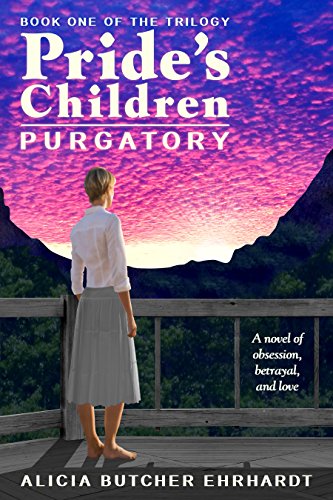
Will: In your trilogy, Pride’s Children, you write with authority about the movie-making business, both in front of and behind the cameras. Pride’s Children: Purgatory introduces us to the rarified air of cinema: movie stars, movie directing, movie production. Is that from research, or do you have some personal experience with the film industry? What was your inspiration for the book?
Alicia: I did some theater acting during prep school, and caught the acting bug. When you’re Queen Elizabeth I in Schiller’s Mary Stuart, Queen of Scots (in Spanish) for months on end, it sticks, living in an alternate world. It wasn’t on my STEM timeline, though I tried a couple of times in college, but I’ve always both liked movies and watching the ‘making of’ documentaries, especially when they started being on the DVD versions. The nuts and bolts—and the eerie effect of the whole as seen by the viewer. The acting classes as an adult were short, but you don’t forget the feeling when the teacher makes the whole class walk around the auditorium yelling obscenities to get over the reluctance.
My writing partner and I took our youngest daughters to an audition in Princeton for A Beautiful Mind, and I asked Ron Howard where would be a good place to watch them filming a scene from, and sat where he indicated. It’s a slow process, but you have time to take a lot of notes. Just having films as an interest brings you random useful stuff through the years, and there is a surfeit of information in articles and interviews online and on YouTube. Books filled many of the gaps. Our Hamilton Public Library had a copy of The Making of Gone With the Wind, a beautiful coffee-table book with hundreds of rare photos.
Some of it, of course, I imagined. Actors and directors are human, and we expect them to give us open and vulnerable portrayals of characters, while we sometimes wonder where a particular piece came from. Pride’s Children was vouchsafed to me in 2000. In one piece. When I had been exposed to several powerful movies, had been sick for years, and had found the ‘billionaire loves a nobody’ kind of romances unbelievable, my mind decided to ask me how a disabled person might possibly end up with one of the world’s most eligible bachelors, a rising star leading man, and filled in the rest of the story. I poked sticks at it for a couple of months, stopped writing the second mystery in my detective series, and started a process which has so far consumed twenty-three years. I didn’t think it would take this long!
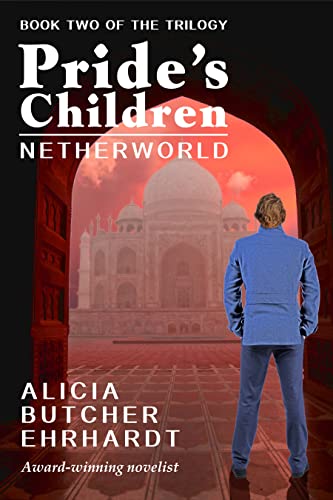
Will: The second book in the trilogy, Pride’s Children: Netherworld, continues the saga of Kary Ashe, Andrew O’Connell, and Bianca Doyle. As an author, you seem to have an uncanny ability to get inside your characters’ heads, exploring not only their emotions, but the motivations for what they do and their layers of self-deceit. How do you do that?
Alicia: I don’t allow a narrator in my stories. So whatever it is that I want to express has to come from the appropriate character in the story. I think of it as writing in third person pov but being the first person narrator of the scene. One of the steps in my Left BRAIN Right method is ‘Gather the feeling of Being this Character’ and includes ‘read previous scenes’ from the character’s pov. It is very helpful because I don’t write many scenes sequentially in the same pov. So for most scenes I have to switch my pov so I can channel a different character, a struggle each time—the three characters are very opinionated. I also insist that anything I write from the character’s pov has to be motivated organically. It must be something the reader would believe the character to think or say in that moment. It is not a place to sneak a narrator/author statement into the story. The characters don’t do things for my convenience. They each talk to themselves differently, and, when I’m them, I’ve trained myself to catch that self-talk. That’s often where the prompts regarding emotions from my FIF file come in useful. I think my mind keeps a short mental checklist for each beat, and nags until I use all the pieces assigned there somehow.
I don’t think of it as uncanny so much as deliberate: if I filled in the prompt ‘Anger,’ with the appropriate reason why the character might feel anger during the beat, the prompt and the writing pulled something out of me because it does belong in the scene, and when I’m moving all those pieces around in my mind for the beat, they snap into each other in a logical (to me) sequence. Like a chain of pop beads. These snippets are all there, there are a finite number of them, and it’s a small-enough number that I can run through the permutations in my head, and write the best order. With the right vocabulary for the character, of course.
In my earlier days as a writer, when I was figuring all this out, there were times when I printed out a scene which wasn’t working, cut it into strips with scissors, one sentence per strip, and rearranged them on my desk until it worked—and then taped them to a piece of paper so I wouldn’t lose that order. I literally compared strips two at a time to find which one was before the other. I called it ‘going back to Kindergarten.’ I couldn’t go to writing classes due to lack of energy, and I didn’t do critique groups mostly for the same reason (and they wanted me to remember several other people’s works-in-progress over weeks and months, something I couldn’t even do with my own!). I had to find my own way, which has been to read many books on craft—tackling small problems such as writing a fight scene again in a tiny piece. Atomizing the task and the skill.
Will: Your protagonist Kary Ashe, former physician turned best-selling author, suffers from Chronic Fatigue Syndrome, a condition that has totally transformed her life. Would you be willing to share with us your own experience with CFS and how it has altered your life and your writing?
Alicia: I became determined somewhere along the way to give a READER the real experience of having to deal with the illness every day, with no breaks and almost no help from the medical profession, to see and feel how the constant calculus of ‘do I have enough energy to do this?’ and ‘how will I function after?’ affects everything they do, and still sometimes doesn’t work. Not as the main point of the story, but from the pov of a character determined not to let an exhausting illness take any more of her energy than absolutely necessary. Many of the little pacing steps Kary uses are things I’ve had to learn. She’s much younger than I am, but back when I was her age, I could do the things she does (like go for a walk or use a wheelchair to save energy in an airport). You learn.
Will: I understand you’re hard at work on the concluding novel of the trilogy. Have you settled on a title for it yet? Can you give us a peek at your work-in-progress?
Alicia: Working (and probably final) title is Pride’s Children: LIMBO. There is a lot in the vernacular about the place where unbaptized children went when they died (thank God the theology no longer believes this), to be happy, but not as happy as they might be in Heaven. It supports the main theme that it’s all, eventually, about the children—and it matters very much who rears them. The prologue to this volume again wrote itself (I have no idea where these pieces come from!), a third chunk of an article in The New Yorker written after the events described by someone who thinks she knows the real story. I can’t guarantee it will stay exactly the same, but they tend to.
Will: Do you have any advice for aspiring authors—what they should attend to, what to disregard, tips for publishing, marketing, getting reviews?
Alicia: My main advice for aspiring authors is to figure out where you are on the spectrum from complete pantser to extreme plotter, and find books and articles and blog posts that are your style. I loved Lawrence Block’s Telling Lies for Fun and Profit, but he’s a pantser, and I can’t write as he does: my structure comes first, and is always undergirding the story. I figure I lost a couple of years in some skills trying to understand why I couldn’t do what he said was so simple. For a rough general rubric: pantsers lose interest in writing the story if they know where it’s going—plotters know exactly where it’s going before they can write it at all.
For publishing: if you do it yourself, there are many skills to learn, but then you know how whether you do it yourself forever or hire someone to do it for you. I did PURGATORY with no help, paid for formatting and cover to the same standards for NETHERWORLD because I had some health problems that required surgery, and I wanted it out before that. I supervised every step, every word, every image—fortunately we are still friends. Join a Facebook writing group, read all the posts. Buy a few inexpensive books—try the steps. There are some shortcuts for some of the steps, like Vellum or Atticus for interior formatting, but they usually cost money. Learn to rigorously self-edit, even if you have an editor at some point—don’t let your initial faults go uncorrected. And do NOT go with a vanity/hybrid publisher—most who do lose a LOT of money, and never write another book. Things keep changing, but publishing paperbacks and hardcovers on Amazon right now can be done with 1) a pdf of the interior of the book, and 2) a pdf using their templates of the cover. There are other methods of input, but I prefer the pdfs because what you send them is exactly what you will see in the published book. For the ebook, send an epub.
Marketing: if you write what a lot of others write, the FB group will give you the conventional wisdom. If you try to write mainstream fiction as an indie, as I do, please let me know when you figure it out (because the traditional publishers think this niche belongs to them). If you want a traditional publishing contract, you have a lot to learn and UNlearn, it is incredibly hard to break into, and doesn’t pay much anymore unless you’re a huge seller. I gave up ‘submitting’ (I hate the term) when my first detective series kept getting nice rejection letters (send us your next book) after a literary agency would sit on it for six months. Educate yourself a lot on many different blogs before making a final choice of what you will try—only self-publishing can be guaranteed to happen if you stick to doing all the steps; traditional acceptance rates are in the low single digits.
Getting reviews is easy (not): put yourself in the position of the reviewer, and talk the reviewer into giving you time, effort, and space. For popular genres, you might be able to follow the trends. For my kind of fiction, only individual, carefully considered appeals have yielded results—and only in about half of the cases I’ve attempted. But the reviews themselves for PURGATORY and NETHERWORLD have been heart-stopping and fulsome. Take a look on the books’ Amazon pages
Will: Alicia, I can’t thank you enough for sharing you insights and energy with us. To my readers, here are links to the first two books in her trilogy. Clicking on her image above will bring you to one of her websites.
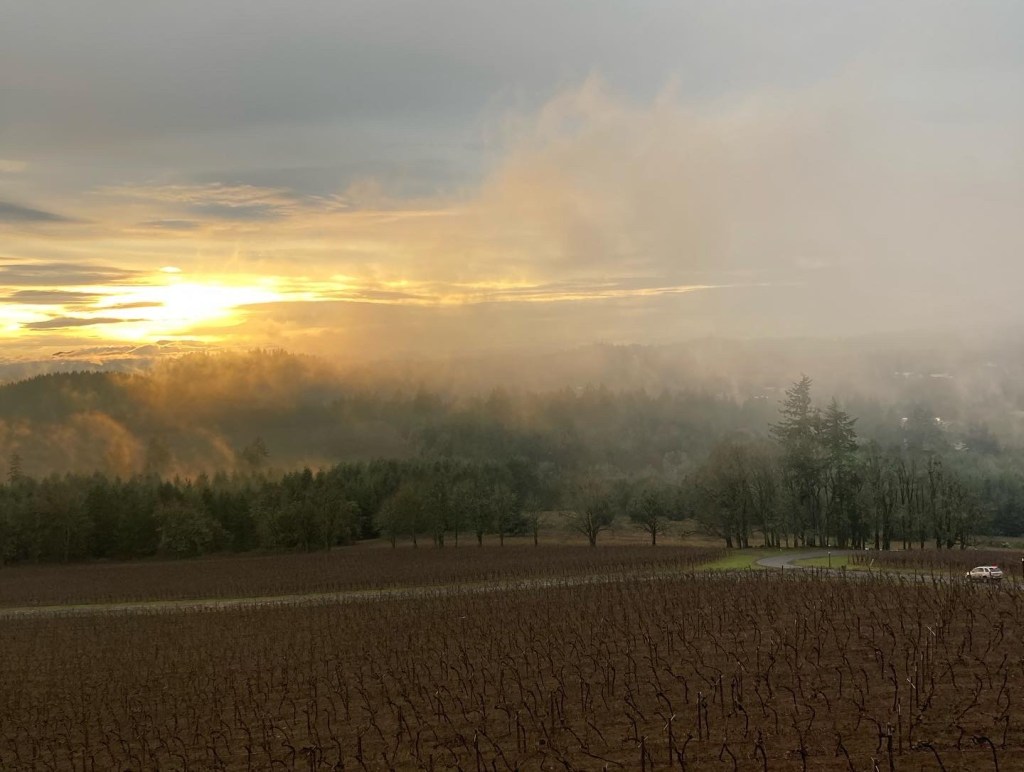
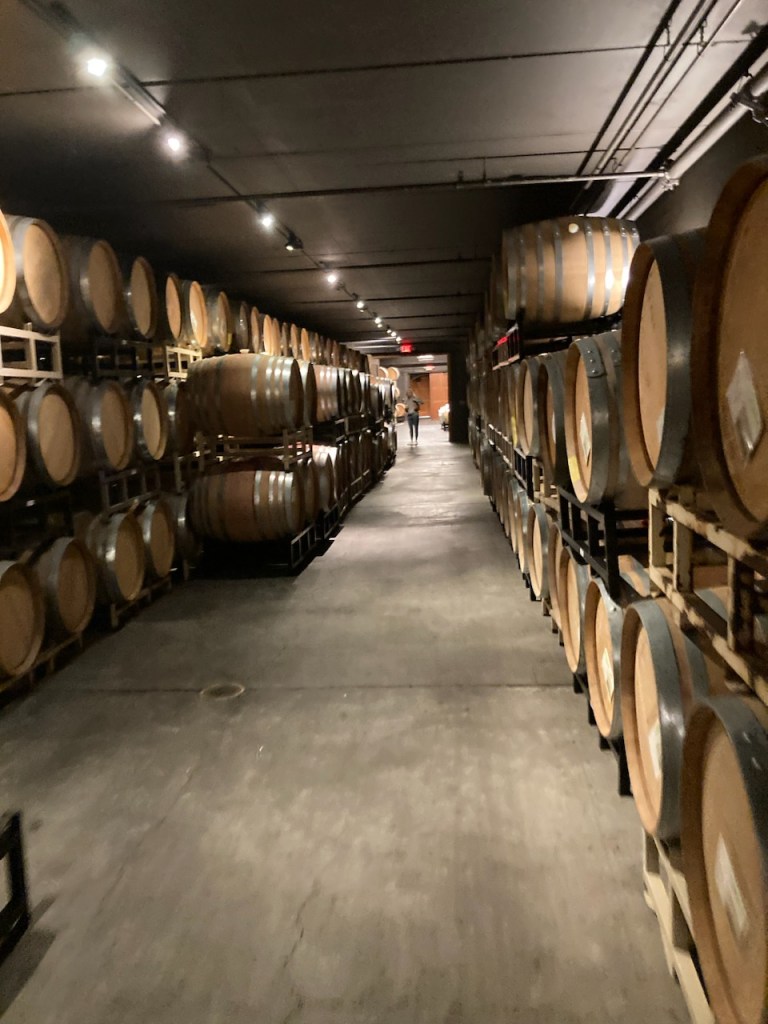
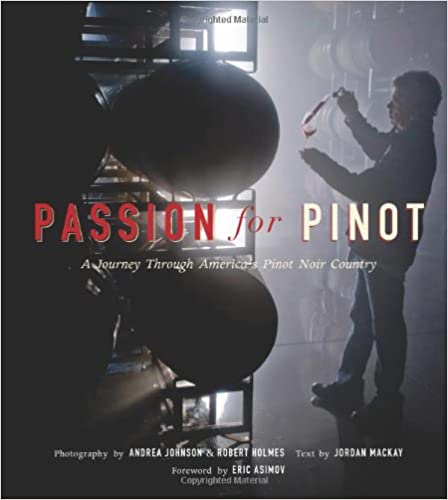
Above, I’ve pasted a picture from Willamette Valley Vineyards, about three miles from my home. It’s still winter among the vines, and they aren’t yet ready to awaken from their sleep. While they doze, the vineyard crew is busy with last fall’s harvest. Juice is fermenting, turning sugars to alcohol. French oak barrels will be home to the elixir for nine to twelve months before it is bottled, and it will rest in the bottles before it is ready to tempt the palate. As Galileo famously said, “Wine is sunlight, held together by water.”
Eric Asimov, Chief Wine Critic of The New York Times, says in his Foreword to the book, Passion for Pinot: A Journey Through America’s Wine Country, “If any grape would be at home in the pose of the femme fatale—smoke curling from its lips, long, irresistible legs crossed as another winemaker is sent to his doom—it would be Pinot Noir.”
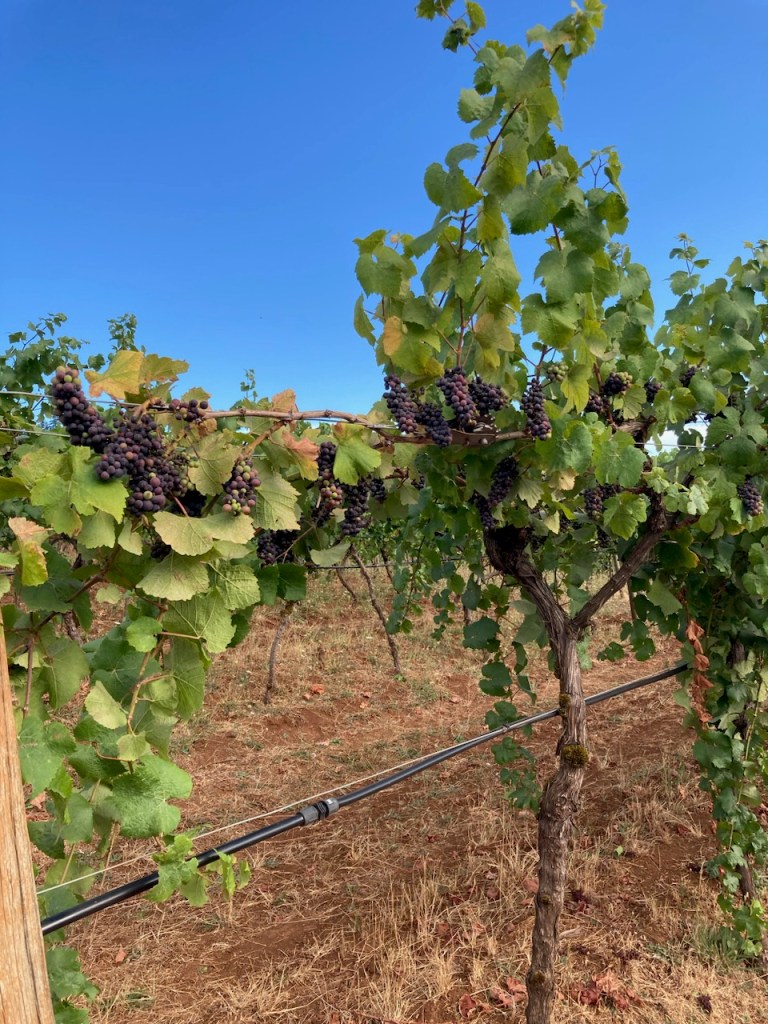
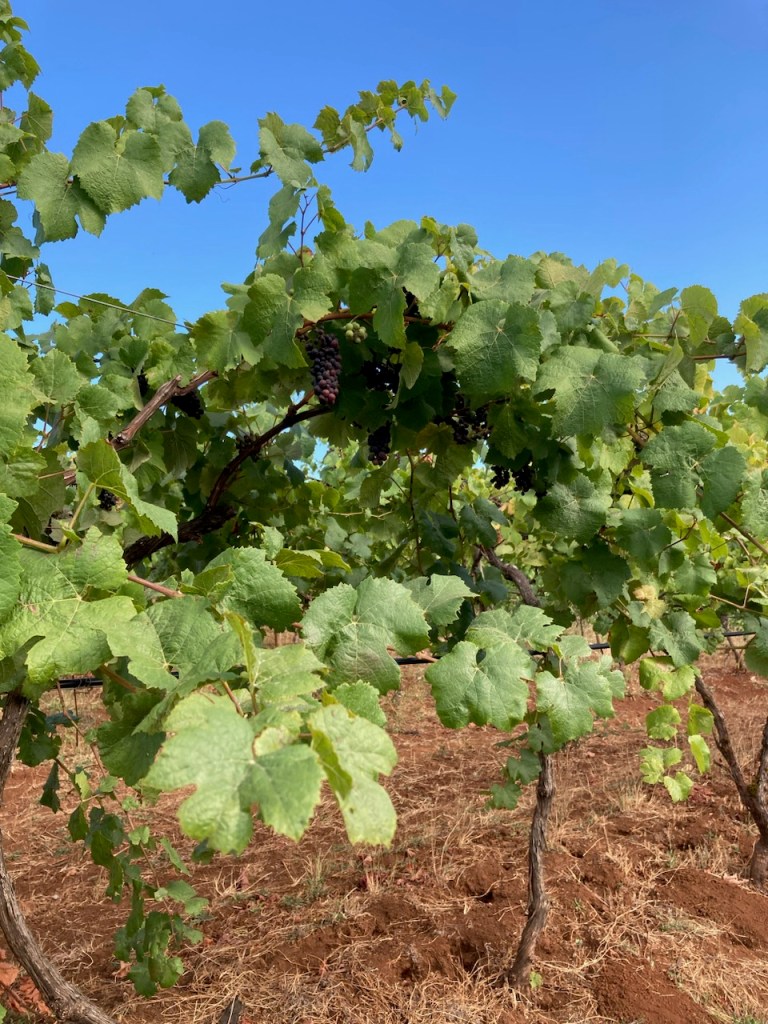
Why? Because the grape can be such a difficult temptress. Widely regarded as the “Queen of Grapes,” Pinot Noir is a challenging monarch. Thin-skinned, susceptible to any number of fungi, subject to mutation, dependent on slight variations in soil, she is as frustrating as she is rewarding. When all the variables come together under the supervision of a master vintner or winemaker, the resulting wine is a cause for jubilation, a miracle fulfilling Galileo’s maxim.
I don’t claim to be an expert on Pinot, but Passion for Pinot is a wonderful place to start a lifelong devotion to the Queen! The text by Jordan Mackay illuminates the history of the grape from root stock and vine, through harvesting and fermentation, all the way to its metamorphosis into the garnet-colored jewel we love so well. The photography by Andrea Johnson and Robert Holmes captures vineyards and wineries in every season of the year. Turning the pages, the reader can almost taste the wine—blackberry and cherry flavors, notes of cinnamon and cloves, perhaps some floral and mineral subtleties.
If you’re enthralled by the Queen, or merely a fan, add this book to your collection. (And in 2024, look for my next novel, All the Bodies Do: A Willamette Valley Mystery.)
I couldn’t resist! I just received a terrific review from The Book Commentary, and I had to share it with you!
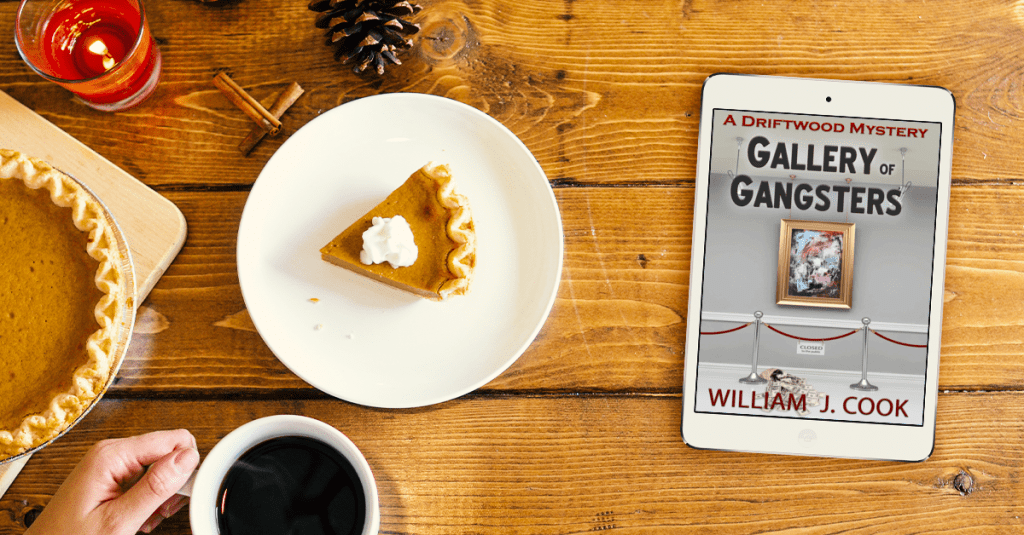
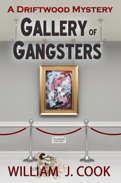
Gallery of Gangsters: A Driftwood Mystery
Author: William J. Cook
ISBN-13: 9798841126331
ASIN: B0B83Y1NHS
The concluding entry in The Driftwood Mysteries, Gallery of Gangsters by William J. Cook presents a final confrontation between two rock-solid, driven characters, each determined to outwit and put out the other. Michelle’s life is in tatters. A mysterious blackmailer is unwavering in an effort to destroy her life and she must get as far as she can to give herself a new start. Meanwhile, in Portland, the rivalry between a Russian gangster known as Volkov and Whitehorse, a detective, is fueled when Volkov gets involved in incessant money laundering to fund dangerous conspiracies, murder, and counterfeiting. Volkov is unstoppable in his pursuit of crime and Whitehorse is out to bring him down in a cat-and-mouse game that becomes more deadly with each passing moment. Can Whitehorse stop Volkov and his assassins while protecting those he loves?
Fans of thrillers from James Patterson will love William J. Cook’s work. The author builds suspense by creating two parallel plots that eventually meld toward the end, bringing Michelle and Whitehorse together. The opening immediately captivates readers as they are introduced to Michelle at an art auction in New York, bidding for someone anonymous who sounds desperate and determined. The reader’s curiosity is piqued. The narrative then moves on speedily, introducing plot twists and surprises that readers can’t see coming. There are strong plot points in this narrative and readers will enjoy the intrigue and suspense built around the mysterious 1848, a character whose identity Michelle spends a lot of time trying to uncover. Striker is another character that will pique the reader’s curiosity — the subtle messages, the blackmail, and the letters. “I know who you are. I know what you’ve done. I won’t bore you with the details in this voicemail, but I’ve posted a letter to you today, spelling it all out.” Gallery of Gangsters is a delightful read with characters readers will want to follow. The ingenious plotting, the dazzling prose, and the exciting dialogue are among the qualities that make this thriller an immersive read. Cook knows what it takes to keep the pages turning and has the extraordinary ability to make it happen.
Book Review of Gallery of Gangsters: A Driftwood Mystery
Diane Donovan, Senior Reviewer, Midwest Book Review and Editor of Donovan’s Literary Services.
Gallery of Gangsters is the final Driftwood Mystery in the series, expanding its five predecessor titles with a new and final battle between Native American detective Charley Whitehorse and Russian crime czar Vasily Volkov. It’s a confrontation that will rock prior readers, and is introduced by an Author’s Note about currency security and counterfeiting that features some key facts to lend better understanding to this mystery’s subject and progression.
This information in hand, readers embark on a vivid romp that opens in the art auction world of 2019. Here, a meteoric bidding war is taking place, with prices hitting the millions for a work of art that two contenders have no intention of losing.
As the bloodless combat between the contenders evolves a chess-like game of strategy and countermoves, readers will be thoroughly engrossed in the story’s mystery and outcome by the time the purchase of Hurricane is complete.
This is just the first chapter of a complex story that moves into the mysterious death of an art gallery owner in Driftwood, who specialized in high-end paintings. It reveals not just the game being played by Whitehorse and Volkov, but a strong woman caught in the middle (Michelle Garrison), whose auction house work has placed her in the crosshairs of a powerful female assassin.
As Michelle asks hard questions about who killed McKinley Striker and Dashiel Owen and becomes immersed in the identity and subterfuge of Odesa (nee Kseniya, whose job is murder), all characters dance into an arena of threat that reaches out to embrace the innocent and guilty alike.
Mystery readers who enjoy stories centered on the art world will find Gallery of Gangsters satisfying for its insights into that community’s activities and the works of art that drive passions and pocketbooks alike. These motivate characters to move outside their comfort zones and into the unfamiliar territory of murder, investigations, and nefarious connections.
Powered by strong personalities whose special interests create different perspectives and representations of moral and ethical behavior, William J. Cook’s story assumes a provocative tone of surprises that embrace unexpected romance and adversity alike.
As events unfold, this final Driftwood mystery comes to life in ways even seasoned genre readers won’t see coming.
As a stand-alone mystery, it will also nicely attract newcomers who have and need no prior experience with the exploits of Charley Whitehorse and Vasily Volkov to prove understandable and engrossing; especially since Michelle’s character powers many of the scenes and insights.
In the end, love wins. But, via a circuitous route that keeps readers guessing right up to the mystery’s satisfying conclusion.
Libraries and readers who look for outstanding characters, an art world backdrop, and intrigue and subterfuge that moves from a small town into international waters will find Gallery of Gangsters the perfect crescendo of a conclusion that explores what is unique and fragile not just in the art world, but in matters of love, power, and the pursuit of profit.
“She slammed the phone down again. It felt like her life was spiraling out of control. Why had she bothered to call? Was she still atoning for her adolescent crime?”
This tale is another in the author’s series about the small town of Driftwood, Oregon. The story, however, begins a continent away at an art auction in New York. There, readers are introduced to a young woman named Michelle, who will journey from one side of the country to another in an attempt to restart her life, currently plagued by an unseen blackmailer. As Michelle’s story unfolds, so too does the interplay between Volkov, a Russian gangster in Portland, and Whitehorse, a Native American police detective in nearby Driftwood. Previously adversaries, they currently share an odd sort of truce until money laundering, counterfeiting, political influencing, and murder begin to create a toxic mix that simply can’t be ignored.
Author Cook effectively weaves his two narratives together. Eventually, Michelle and Whitehorse are engaged in efforts to not only keep themselves safe from Volkov’s assassins but, in the detective’s case, his wife as well. Continuing characters from previous books in the series are on hand to give a feeling of family to this novel. One of the more appealing players is Chiara, the Driftwood Police dispatcher who is bright, perceptive, and perhaps well on her way to one day becoming a detective herself. On the villain’s team, Kseniya is a stone-cold killer who is as lethal as she is beautiful. Her ability to dispatch individuals with extreme prejudice is matched only by her inability to exhibit any form of emotional involvement with them—until she encounters Michelle.
Author Cook does a first-rate job of mining interpersonal relationships as he’s peeling back the layers of his plot. His depictions of interactions between husbands, wives, and lovers feel honest and real. The people who populate Driftwood are folks readers can enjoy spending time with, particularly as they keep the bad guys at bay.
From his Amazon Author Page, we learn that Adam was born and raised in Silverton, Oregon, and that he studied abroad for a year in France. Ever since that time, he has been passionate about international travel. He is an avid outdoorsman, enjoying hiking, backpacking, camping, mountain biking, and scuba diving. He is the co-founder of the Northwest Independent Writers Association. Currently, he resides in Vancouver, Washington, where he is an active member of St. Joseph’s Catholic Church.
Will: Adam, how did you come to realize that you’re a writer?
Adam: Even as a child I was told that I was a story teller. I’d come up with the most imaginative stories. As an adolescent, I wanted to see my stories go “big time” as a book or movie, but of course I felt I didn’t have what it took to make that happen. It wasn’t until after college that I seriously gave it a go and wrote the first chapter to my first book. Then the next, then the next. After the book was finished, I felt “accomplished,” but not quite like a writer yet. I knew that no one was ever going to give me permission to be a “writer,” so I just went and made it happen through self-publishing. When I held that first proof in my hand when it arrived in the mail, that is when I realized I had accomplished being not just a writer, but an author.
Will: Can you give us a glimpse of your process? How do you get your ideas? Do you develop an outline first or are you what they sometimes call a “pantser?” How structured are you about your writing—do you have a dedicated space for writing, a dedicated time?
Adam: I’m most definitely a “panster.” My ideas mostly come from the ether. From the muse. Nudged into existence by the inspiration of music, other books, and movies. My last book touches on that where the narrator, a writer, literally sits at a table with his muses and discusses the story being told—and how they quite often push back or admonish him. I have a general idea where the story is going, then it just happens to come together as if it were meant to be. I do, however, really need to reign that in and learn more the art of story and outlining. I’m a binge writer. Usually in 4-hour blocks on a weekend. Usually at a favorite café with comfy couches where the ambient sounds of the café act as white noise.
Will: You have two books in your Tales of Avalon series: Echoes of Avalon and Ripples in the Chalice. Can you tell us about them?
Adam:Echoes of Avalon is my first book and serves as a repository for all the knowledge I accumulated through my life regarding my love for fantasy, mythology, legend, and history. Before school would start, I’d hang out in the library in the mornings just reading encyclopedia articles about anything that had to do with swords, knights, castles, and ancient battles. My father had a similar passion, so our house was full of books, too. The Hobbit was my first adult book that I read. Echoes of Avalon is a love letter to my love of all that. Ripples in the Chalice is its sequel. I often pitched Echoes as “If you could go back in time to witness the actual event that inspired a fairy tale, it would look like this.” Such is the story of a knight in shining armor, charging up a mountain of glass, to rescue a princess in an ivory tower. But since we’re talking about real life here, does the princess want to be rescued? And by him? Ripples in the Chalice isthe follow-up revolving around the consequences of one’s choices, made all the more profound by the involvement of the Holy Grail.
Will: What about your book The Tower?
Adam: When writing Echoes of Avalon, my editor told me my antagonist needed to be more fleshed out; a real person with real motives. So I wrote this novella as a back story to my villain to explain why he is the way he is. The story goes waaaay back to when the progeny of exiled angels passed themselves off as gods with a little “g,” incurring the wrath of God with a big “G” and getting a front row seat to the Great Flood for their troubles.
Will: I confess that I was blown away by your novel Midnight in Silverton: American Gothic. What a strange and wonderful book! And the new audiobook version is extraordinary! What can you tell us about it?
Adam: If Echoes of Avalon and Ripples in the Chalice were love letters to my fascination with fantasy, then Midnight in Silverton was a love letter to my home town and the people there. Echoes is a repository for my life knowledge, Midnight is a repository for my life experience. It was a lifetime in the making, born of a thousand inspirations. From Bradbury, to King, to Hemingway, to…well, just about everyone whose words touched me. It’s very meta, where the reader is along for the ride with a wink. I’d call it a “faux-ography” that draws from my personal life to provide a stage for a murder mystery with supernatural elements. As I mentioned above, the Narrator’s muses guide him while he tries to solve the murder, even though he *might* not want to find out who it is. Though it has elements of Fight Club, Dandelion Wine, Arrival and other great stories, this one’s uniquely all mine.
Will: You are a co-founder of NIWA—the Northwest Independent Writers Association. How did that come about? What should our readers know about NIWA?
Adam: While promoting my first book, I nabbed one of the last spots in the vendor room for Orycon, a sci-fi and fantasy convention in Portland, Oregon. The event organizers asked if I’d mind sharing my spot with another author who had signed up late. I was totally fine with that and that’s how I met Mike Chinakos, author of the wonderfully fun Hollywood Cowboy series (An 80’s metal band that also moonlights as vampire hunters). He noticed that we weren’t the only ones selling self-published books that day and suggested we should all band together and pool our resources. I said, “Ah, heck no, that sounds like a lot of work!” Sigh. It was. But I wouldn’t change it for anything. The friendships and connections I’ve made have been priceless. If I wantreaders to know one thing about NIWA it’s that there are so many great authors right here in your own backyard who deserve a look (C’mon! A hair band that fights vampires! How can you not want to read that?).
Will: Are you working on a new project? Can you give us a peek at it?
Adam: I have an un-published manuscript that has come very close on a couple of occasions to being published with traditional publishers. It’s a WWI vampire/zombie action adventure. I’d like to take a stab at making it into a graphic novel. All my writing is very visual. I basically have a movie projector in my head, and this story isn’t any different and so would lend itself very well to the graphic arts media. In a nutshell: What if, at the height of trench warfare in the First World War, the Germans got so desperate to break the stalemate that they tried lobbing a vampire at the Allies? With a tagline like “A weapon of mass destruction is only as good as your ability to control it” goes a long way to telling you how that plan goes.
Will: Do you have any advice for aspiring independent authors?
Adam: Keep at it. Don’t quit. Write something. Then read something. Then write something else. Repeat. Mostly, just keep at it. I subscribe to Duotrope, which is a website and information-center for places to submit writing to. It keeps track of your submissions. It tells me I submitted a variety of stories over 200 times over several years before I finally got my first “real” acceptance. It didn’t pay much, but the fact the publisher turned my Film Noir Bigfoot creature feature (Incident at Ape Canyon) into a multi-voice cast audio story was well worth it.
Will: Adam, thank you so much for sharing some of your writer’s journey with us. I wish you wonderful success with all your projects.
Her Amazon page tells us that as a child, Suzanne was prone to prevaricate to save herself from embarrassment. This story-telling talent led her to writing her first book, The Story of Grace. Her parents divorced when she was barely out of nursery school. Three stepfathers later, she came of age in a small country town while working in the hay fields and driving a tractor. She still loves the smell of freshly cut alfalfa and doesn’t mind getting her hands dirty. She lives with her husband in Salem, Oregon.
Will: Suzanne, when did you first realize you were a writer, and what drew you into the field?
Suzanne: I still don’t consider myself a writer. I see myself more as a storyteller. When I think of writers, I imagine someone that readers are drawn to. Someone who creates excitement for each upcoming book. I think of readers who quote their favorite writers. I’m not there—not by a long shot. But I love to weave a story of overcoming pain or tragedy. I like to bring to life events in my characters’ lives that inspire readers.
I had never written anything until I retired, six years ago. I decided I had a story of my own to tell. I started there and found that I enjoyed bringing to life memories. I enjoyed embellishing my story with color. Then, I decided I could live multiple lives through the characters I created in my fiction.
Will: Can you tell us a bit about your process? Do you have a dedicated place and time for writing? Do you work from an outline?
Suzanne: I am constantly thinking about my story and future stories I might tell. I walk with my characters throughout the week and attempt to capture their feelings and mentally outline what they are doing in the book. I take notes on my thoughts and fine-tune at a later time. Occasionally, another potential book will pop into my consciousness and that’s very distracting.
However, when it’s time to write, I have a dedicated place and time. I review what I’ve written up to the current point in the book. I look at my notes. Then I have a conversation with my characters and allow them to drive the plot forward. Along the way, they may be angry, hurt, confused, or sometimes lost and need my help to resolve their issues.
I do the necessary research as I am writing. I search for accurate settings and props. Generally, it’s like watching a play while sitting at my keyboard. I type what I’m seeing.
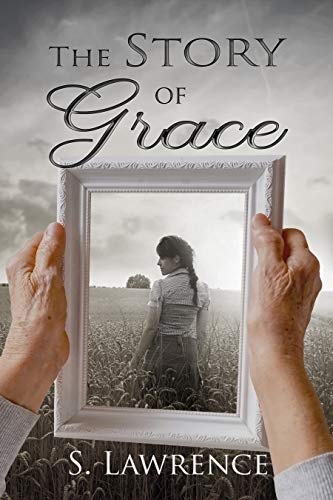
Will: In your debut literary novel, The Story of Grace, you’ve created a female protagonist we can love and hate at the same time. What was your inspiration for her?
Suzanne: Grace was a very complicated character and I borrowed from strong women in my past. Originally, I had sympathy for Grace because she was alone in her final years. She had been so lovely, strong, and independent. Now she felt sorry for herself, and that was not an attractive quality. I took parts of myself, my mother, and other women I’ve known who made many bad choices in their lives and paid the price for it. They hurt people along the way. But, as I wrote the book, I realized I cared for Grace and, in the end, it was necessary for someone else to love her and respect her, no matter what mistakes she had made.
Will: Is it accurate to describe the arc of that story as “a tragedy with a promise of redemption?”
Suzanne: Yes, that would be accurate. Grace could never correct the damage she had done not only to herself but to others. She may have felt bad for what she’d done, but given the opportunity, she would no doubt have made the same decisions. When her grandniece became her companion and friend, she found someone who didn’t judge her for her mistakes. Grace despised being judged by others. She criticized herself, she didn’t need criticism from others. She needed unconditional love. Because in the end, love does conquer all.
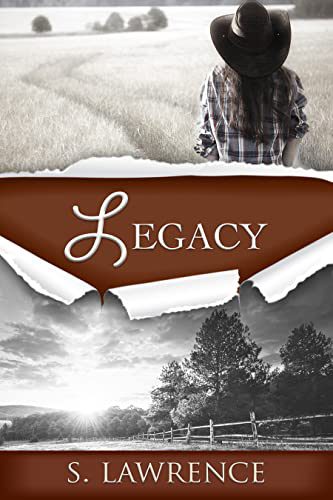
Will: Your second novel, Legacy, is an epic western about several generations of a family tending the Lazy M Ranch in southern Oregon. On its Amazon page you say, “If you like Yellowstone, Bonanza, or The Big Valley, you’ll love Legacy.” Tell us about it.
Suzanne: I chose these three television sagas because they have a central theme of family ranches and overcoming difficulties.
The Big Valley had a strong matriarch (Barbara Stanwyck) and was loosely based on an actual ranch in California. The ranch was built around the shared family goals. The family was fighting to keep their ranch. They fought to keep the railroad from crossing their land.
Bonanza did not have a strong female character, but again, the ranch was a family ranch, and in each episode, they faced moral dilemmas. They stuck together and fought for what was right for their ranch.
Finally, I added Yellowstone because it’s a current television hit. Again, it involves a family ranch and the obstacles that face the family as they strive to keep their land. It has a strong female character in Beth Dutton. She’s far more obnoxious and crass than my characters in Legacy, but her desire to protect the family ranch at all costs is admirable.
I think that people tend to romanticize the lives of ranchers. In Legacy, I wanted my readers to see that it’s more than just riding horses and wrangling steers. It’s hard work that takes the cooperation and dedication of everyone in the family. Hardship happens, and often no one understands but family.
Will: Can you share with us some of what you’ve learned as an indie writer? What works and what doesn’t work? Do you have any advice for new authors aspiring to publish independently?
Suzanne: I’ve published only two books, and I don’t think that I’m in a position to be giving any advice. However, I feel very strongly that you need to surround yourself with other good writers—writers who will offer support and criticism. I participate in two writing groups and without their support, I would flounder and certainly lose focus.
The best thing that I could say is to keep writing. Keep your inspiration fresh. Don’t be afraid to try something new. Work hard and stay focused on the goal. Do your research. Your readers will know if you screw up and put a cell phone in the hand ofa character before cell phones were invented. Make it authentic. That means, giving your characters true emotions. Your readers like conflict, anger, love, and loss. They are reading your book because they want to feel something. I think readers want something out of your book that they are curious about or that is missing in their life.
There are several options for self-publishing. I chose KDP because it has good support to market your book, and the customer service is very responsive.
Will: Would you be willing to give us a peek at your current project? Do you have another novel in the works?
Suzanne: Of course. I’m working on a follow-up to The Story of Grace. It’s called The Forgotten Daughter. In this story, we get to peek inside the life of the daughter Grace gave away (in my first book). Although Grace found redemption in the end, she didn’t find it from her daughter. The damage was too great for Agness to get over. Now Agness has a daughter of her own and a granddaughter. She blames herself for her daughter’s troubles and wallows in her own regret of things she should have done differently. Her granddaughter, Beth, is coming to live with her. Agness is discovering that she is more like her mother, Grace, than she wants to admit.
Will: Suzanne, thank you so much for sharing some of your writer’s journey with us. I wish you every success with your new project.
“Maybe it’s just that vibe any decent bookstore or library has. A kind of magic. Perhaps it’s the clocks that make time more visceral, like something you can feel on your skin or get tangled in your hair.” That description of entering the Books ‘N’ Time Bookstore in the thriving little community of Silverton, Oregon, made me sit up and take notice. What kind of book is this? With its subtitle, I had expected some kind of horror story, perhaps even ghosts? But Midnight in Silverton is so much more than that. Yes, there are “ghosts” of a kind, and there is a serial killer on the loose, but this is a literary work with in-depth character development, brilliant turns of phrase, profound meditations on loss and regret and the poor choices all of us make. The introspection is unnerving at times, exploring a mind pushed to the breaking point. Is it PTSD? Schizophrenia?
Like a Mayberry gone off the rails, the “quaint” Silverton slowly reveals its underbelly—biker gangs, drug-trafficking, domestic abuse—as the narrator returns to his parents’ home to try to recover after losing his job, his finances, and a string of broken relationships. But as Thomas Wolfe famously wrote, “You can’t go home again.” The demons and nightmares persist. Our narrator’s flaws are as firmly attached to him as his shadow. In fact, the novel may be read as an exploration of what Carl Jung called the shadow—the unknown dark side of the human personality nestled in the unconscious. That shadow is a low bass note, increasing in volume and menace as the story unfolds.
Despite the darkness, there is humor here as well, the kind of humor that is only possible in the context of enduring family bonds, and the love and support of life-long friendships. Midnight in Silverton is a kind of love letter to a small town, an homage to a real Oregon community that may make you want to pay a visit. It’s a novel not to be hurried but to be savored, as you might a fine meal enhanced by a perfect Pinot Noir.







 William J. Cook