
Writing Essentials: Organizing Your Publication Process
This is Suzanne Hagelin’s fourth post in a six-week blog tour series for the Northwest Independent Writer’s Association. NIWA serves Pacific Northwest writers working to achieve professional standards in independent writing, publishing, and marketing.
So much goes into writing and polishing a book that when it’s finished, you think you’re done. But that’s only one chunk, albeit a large one, of an author’s investment in releasing their work.
After the edits, rewrites, clean-up, and cover art are completed to your satisfaction, you’re finally ready to publish. Now what? What are the basic elements of the publication process? I’m speaking here to self-publishing authors and small press start-ups. If you’re looking for a publisher who will do the work for you, this post will give you an idea of what that entails.
There are tasks that only need to be done once, before you publish your first book, such as buying ISBN numbers and setting up accounts with the printers, publishers, and online distributors you intend to use. There are also items to check off your list each time you publish something. The first time you walk through this, you want to make sure you allow enough time for each step of the process. Once you get the hang of it, it should get easier and perhaps faster.
This list should help you plan your publication timeline.
ISBNs and Copyright
ISBN stands for International Standard Book Number. Each version of your book requires a different number. When you buy them, you don’t have to have the titles of your books decided and it’s not necessary to follow up and inform the government which titles were assigned to each number.
It’s very easy to get an account with Bowker and buy ISBNs, but don’t waste your money getting only one at a time. If you start with one book in both print and digital forms, then end up rewriting your book, releasing a second edition, and adding an audiobook—that’s five ISBNs right there. Some online publishers like Amazon’s KDP will give you free Amazon numbers but then you are limited to selling only through them. You can still release the book somewhere else with a number, but it’s considered a separate edition.
Add a copyright statement on one of the first pages of your book with the © copyright symbol, the year of publication, book name, and author name, and a statement of what those rights are. Check books you have on hand to see what they wrote if you aren’t sure what to include. For more information on the government’s copyright laws, check here.
Time: Get your ISBN numbers ahead of time. The purchase goes through pretty quickly, but it’s an added stress and there’s no reason to put it off. When it’s time to add one to your book it’s a matter of minutes.
Metadata
Writing the book description that will go on the back cover has to be done before the cover can be completed, so you will already have the raw material for your metadata. Every book that is published needs to have the following information.
- Title
- Author(s), Contributor(s)
- Author and contributor bios
- Book description
- Brief catalog description
- Genres
- Tags (for search engines)
You should be able to fit this into the publication timeline without scheduling any extra time. Just don’t forget it. It’s a pain to be uploading files and suddenly realize you forgot to write a description.
Formatting
I always format for the print edition first and the digital version second. A lot of the cleanup I do for the print edition helps with the ebook but managing it in reverse doesn’t have the same benefit.
PRINT—When setting up your manuscript to print, whether in bulk or using a print-on-demand (POD) option, you will want to format your book according to their specifications. This includes bleed, which allows for cutting the book after it’s been printed and bound. Allow for this extra amount when setting your page size and margins. You also need to keep in mind that the first page is a right-hand one. Page numbers run accordingly, odd numbers on the right and even numbers on the left.
Use “Styles” for all your formatting and it will be much easier to keep it uniform through the entire book. Don’t add spaces at the beginning of your paragraphs, set it up in the paragraph style with a first-line indent. When you’re finished formatting the document, turn on hidden characters (such as carriage-return) so that you can see what you’ve done with page breaks, sections, etc. Correct mistakes you would otherwise miss, and you’ll have fewer surprises when you get a proof copy.
Make sure your final document meets the printer’s requirements with fonts embedded. Some online services may have tools for cleaning up your file, but the finished product could look different than you intended. I recommend using Adobe Acrobat to distill it into PDF/X-1a:2001.
EBOOK—eBook conversion has different requirements than the print version. You don’t need blank pages and there are no page numbers, headers or footers. After you’ve set the margins, there’s little else to do for spacing.
The important part of formatting a book for digital conversion lies in the overall structure. The best way to look at this is to open up the “Outline” view of your book and check each level. Your title should be at level 1 and whatever else you want to be part of your table of contents should be level 1. The eBook conversion will generate the table of contents on this basis. I like to include the copyright in my contents, so I make the first line on that page a level 1 along with the chapter headings.
The cleaner the outline, the more straightforward the conversion will be.
Time: Allow a couple of days work for formatting if the process is familiar to you, longer if it’s your first.
EBOOK Conversion
You should have no trouble with the conversion if your formatting is straightforward. Whether you use a free app, a template, or a service to convert it, it’s important to open the resulting file in a reader to check it. Reader apps are free, and I recommend getting as many as you think would be used by your readers. By right-clicking on your epub file and choosing “Open with” you can select the one you want to use to check your ebook. I have Kindle, Barnes & Noble, iBooks, and Calibre apps, plus other platforms like Draft 2 Digital provide a reader app when you upload your book through them.
Scroll through the book and be sure to check your table of contents if you have one. If you have extra breaks and invisible characters you didn’t see in your document, this is where they will show up.
Time: Allow a couple days to convert your ebook and fix any problems. If you are dealing with a learning curve, that should be scheduled separately.
Proof Copies
When you’re fighting a deadline, it’s very tempting to bypass this step, or at least to rely only on the e-proof when checking for mistakes. I’ve done it more than once. That’s when things like this can happen:
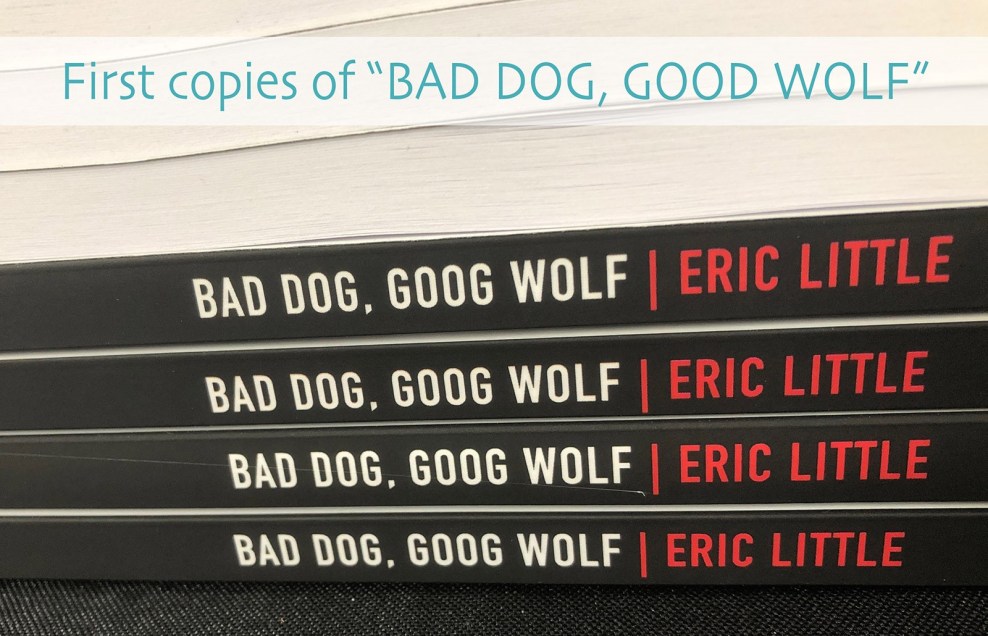
As the publisher, it was up to me to catch this mistake by the cover artist. This picture, taken of books already on sale at an event, was the first time I noticed. The battle to get them there on time blurred my vision. Fortunately, we’ve learned to laugh and take it all in stride. It’s still a great book and most people don’t seem to notice the spine. And we had only ordered what we needed for that event.
If your printer doesn’t offer proof copies, you can set your publication date in the near future and order a printed copy, shipped overnight. It’s worth paying extra for the quick delivery. The sooner you find mistakes and get to work on fixing them, the better.
Time: It can take a couple days after you’ve placed the order for the printer to get to your book. Then overnight shipping at best means the next day after that. If you have weekends or holidays to contend with, it could stretch out as long as a week before you get your book. Make sure you factor that into your timeline.
Wholesale Orders
Ordering printed books in bulk is pretty straightforward—you want to have copies to give out and to sell. Don’t make the mistake of ordering too few or too many. One case, whether that holds 20 or 30, is a reasonable number to start with. It also makes a difference if you need to factor in shipping costs, to order in multiples of however many fit in a case. This saves on the overall cost per book.
As you get into the flow of selling physical copies of your books, you want to restock in time. I try not to let my inventory go below 10 copies per book when I’m in between minor events. For major events, I want more on hand, depending on how well each book has sold over the last six months. Until you figure out your needs, plan to order more when you get down to half of your last case.
Time: Allow three weeks for a normal order. Major printers like Ingram Spark will usually take a work week to get your order printed and ready to ship. When in a time crush, it’s more cost effective to pay for rush printing than rush shipping. Normal ground usually arrives in a week or two. Local printers can be a joy to work with because depending on their workload, they can meet some difficult deadlines and there are no shipping costs.
Reporting
This should be a blog on its own, but it’s worth mentioning here. Figuring out how you want to keep records and track everything takes time. Don’t barrel through the publication process without setting up something basic to see you through until you know what you’re doing. Write down every expense, save receipts, keep track of links, accounts, passwords, everything pertaining to the process.
I have no idea how much time to advise that you set aside for this. It should be strewn out along the entire publication timeline.
Suggestion: Get an email address specifically for your author/publishing business and have all your accounts, transactions, and related connections go through it. Don’t use it for anything else. It’s the easiest collection method for raw data that you have.
Final Thoughts
Once a book is ready to move into the publication process, I need to allow a minimum of four weeks (with some frantic work thrown in) before I can count on having books in hand to sell, and six to eight weeks gives me a little breathing room. Overlapping the steps, such as getting a print proof copy on the way before I even look at converting an eBook, makes better use of the time.
Planning your publication process may improve your chances of a flawless end result, but absolute perfection in books is a myth. Give it your best, learn from your mistakes, and shoot for 95%.
This is actually one of my favorite stages in the process. I love the excitement of the imminent arrival of a new book!
The first post in this series is “Writing Essentials: Organizing Your Mind”.
You can read the second installment here, “Writing Essentials: Organizing Your Time”, and the third here, “Writing Essentials: Organizing Your Plot”.
The fifth post, “Writing Essentials: Organizing Your Approach to Sales”, comes out next week on Mollie Hunt’s Blog.
Graphic made with photos by NASA Hubble and Christophe Ferron on Unsplash
=====
USA Today bestselling author of hard science fiction, Suzanne Hagelin, lives in the Seattle area where she runs a small press, Varida P&R, and teaches language on the side.
Her Books. The Silvarian Trilogy Book 1, “Body Suit” is available for 99c in April only and the audiobook is Downpour’s current Editor’s Pick at $4.95. Book 2 “Nebulus” just released on audio, and Book 3, “The Denser Plane” is in the writing stage. The Severance begins with “Cascade” and will be followed by “Eclipse”.
LINKS—Suzannehagelin.com, Suzanne’s Blog, Newsletter, Twitter, FaceBook, Medium
=====
 USA Today bestselling author of hard science fiction, Suzanne Hagelin, lives in the Seattle area where she runs a small press, Varida P&R, and teaches language on the side.
Her Books. The Silvarian Trilogy Book 1, “Body Suit” is available for 99c in April only and the audiobook is Downpour’s current Editor’s Pick at $4.95. Book 2 “Nebulus” just released on audio, and Book 3, “The Denser Plane” is in the writing stage. The Severance begins with “Cascade” and will be followed by “Eclipse”.
LINKS—Suzannehagelin.com, Suzanne’s Blog, Newsletter, Twitter, FaceBook, Medium


 William J. Cook