I want to update friends and family to the status of my current project, the novel All the Bodies Do. Since the story begins in Las Vegas, my wife wisely suggested we take a trip there for research. It was a wonderful idea because it lent more authenticity to my descriptions of the city and the surrounding desert. The picture above is the so-called “bathtub ring” around Lake Mead, left as the lake receded to its lowest level ever because of the megadrought here in the West. It’s white because of the calcium carbonate in the waters of the Colorado River.
By spring of 2022, water levels had dropped 176 feet, exposing the skeletal remains of bodies on shorelines that had previously been underwater. The most famous is “Hemenway Harbor Doe,” a dead body found in a fifty-gallon drum near the Hemenway boat launch and marina. As if being found in a barrel wasn’t enough to get it labeled as a homicide, there was a bullet hole in its skull! Below is a picture of Boulder Basin, the area where it was found.
This photo was taken from the Lake Mead Overlook outside of Boulder City, a place where tour buses and visitors stop. It was fun to watch people pose for pictures in front of this background. Since no mention is made of “Hemenway Harbor Doe” on the information posted here, my guess is that most didn’t know they were posing in front of a crime scene!
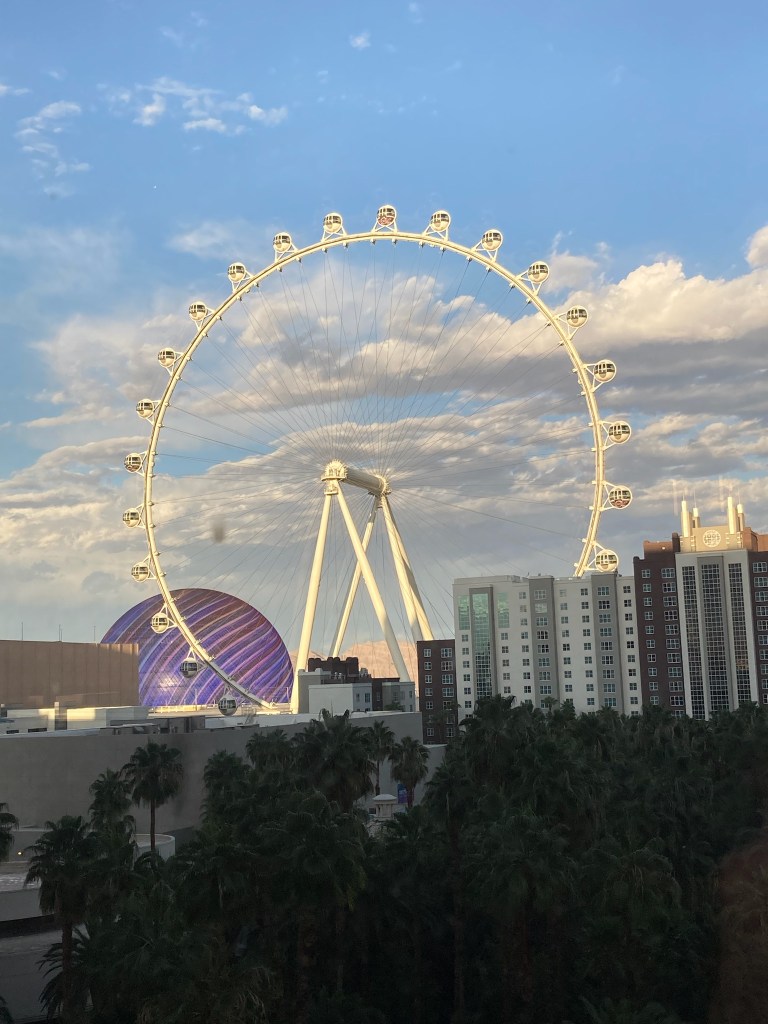
Finally, I took the picture below from our hotel room. That’s the famous Sphere, which just opened last Friday with a concert by U2. The Ferris wheel is called the High Roller, and it had been the highest in the world until 2021, when it was surpassed by one in Dubai.
The protagonist of my book, the investigative journalist Kate Temperance, will discover the identities of the bodies in Lake Mead—or die trying. Her adversary, Sofia Gemelli, owns the (fictional) Florentine Hotel and Casino on Las Vegas Boulevard. Kate’s investigation will take her from the Vegas Strip and the Nevada desert to the lush vineyards of the Willamette Valley in Oregon. My hope is that the twists and turns of the story will keep readers guessing and keep them turning pages long past their bed time!
The manuscript has had a thorough editing by my beta readers, and now that I’ve added my notes from our Las Vegas trip, I’ve begun to query agents to see if I can get it traditionally published. If I can’t connect with an agent within the next 8-10 months, I’ll go ahead and publish it independently. I’ll keep you apprised of this writer’s journey!
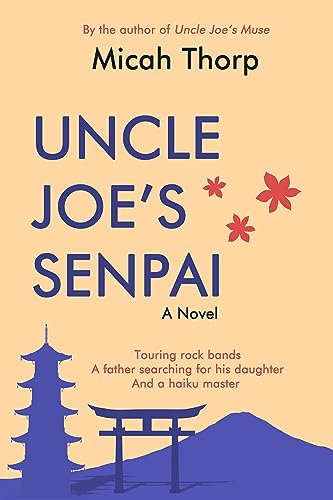
In Thorp’s follow-up to his masterful Uncle Joe’s Muse, the boys—and Allison—are back in town. But things have changed for the better. They play concerts in big arenas instead of little seedy dives, they have a recording contract and a full-time agent, they’re going on tour in Japan. If only Ian can figure out who of the all-female punk rock band Stygian Teal is the daughter he never knew he had. Perhaps he’ll find out if Uncle Joe’s Band signs up Stygian Teal to be their opening act in Japan.
As with Uncle Joe’s Muse, Uncle Joe’s Senpai tells two entangled tales, that of the band’s (mis)adventures and that of the mysterious nomadic poet Joji Ojisan, who treks across Japan leaving a trail of haiku poems in his wake. Along the way, Joji meets Satoshi Tajiri and inspires him to develop the Pokémon game franchise. He encounters Hayao Miyazaki and helps him create what becomes the classic animé “My Neighbor Totoro.” He provides encouragement for a young Masako Owada, the woman who will become empress of Japan. And he helps some American Marines catch lobsters for dinner.
A note of caution: don’t read this book in a place where you have to be quiet, like a library or the middle seat of an airplane. Your laughter may disturb those around you. Thorp’s novel is a comedic gem, seasoned with just the right amount of insight and wisdom so it lingers long after you’ve finished.
Reading Uncle Joe’s Senpai is like eating oysters with a fine Chardonnay—you savor every delicious morsel and you don’t want it to end.
It’s my pleasure to introduce to you Micah Thorp, who may soon become your new favorite author. As his Amazon page tells us “Micah L. Thorp is a physician and writer in Milwaukie, Oregon, who lives with his wife, three teenage boys and an overly self-assured dog. He loves taking care of patients, participating in clinical research, and writing fiction and non-fiction stories. A lifelong Oregonian, he grew up in the shadow of the timber industry, a waning 1960s counterculture, and Ken Kesey.”
Will: From your Amazon author page, we see you’ve been writing fiction and nonfiction for many years, but Uncle Joe’s Muse looks like the first novel you’ve written since OperationHoneybee, a medical thriller, back in 2005. And now you’re about to publish a sequel, UncleJoe’s Senpai. What lured you back into writing novels?
Micah: I wrote Operation Honeybee when I was in a medical school. I was doing a rotation on the Omaha Reservation in Nebraska and had a lot of down time at night with very little to do. One of the great things about the act of writing is you don’t need much other than time and something to write with to engage in it. A few months later I’d finished my rotation and a novel.
Shortly after I returned, I started residency and had little time to do anything other than work. Starting a career and raising kids kept me busy for a couple decades.
About five or six years ago my wife suggested I go to a writer’s workshop. I enjoyed it enough I went to another, then another. After a couple years I realized I’d written enough to begin formulating a second novel.
Will: You’re a physician—a nephrologist—who’s written about medical research as well as about the sometimes laugh-out-loud antics of Uncle Joe’s Band, a group of four aging metal heads. Is writing a passion for you? A Yin and Yang thing: science and art?
Micah: Exactly. Most of the research I’ve been a part of involved the epidemiology of kidney disease and/or predictive analytics. The writing necessitated by research is pretty much the opposite of creative writing – it’s done in a very structured manner in a group, and the important part of it usually isn’t the prose. It’s creative in its own way, but very different. Writing grants and research papers is done mostly by committee, which can suck the life out of even the most creative soul. I love research, it’s invigorating to be the first to uncover something, but the process can be laborious.
In contrast, my approach to creative writing is very unstructured, at least at the outset. The generation of ideas is a pretty fluid and somewhat random process. I’ll write a whole bunch over a week or two and then nothing for a period of time. For me, the structured part of creative writing (and really the important part) is putting all the disparate pieces together into a coherent narrative. It’s something I’m still learning to do.
Will: Can you tell us a bit about your writer’s journey? When did you realize you were a writer? What about your process? Do you have a special time and place for writing?
Micah: I don’t really think of myself as a writer. I find writing is something of an outlet – it’s not therapy, but it is therapeutic. I don’t write every day, nor do I have a special time or place where I write. I write whenever the muse strikes, which can be both quite inconvenient and hard to accommodate, but I find in those periods I produce my most interesting work.
I would add that the process of writing doesn’t always involve “the writing”. Reading other writers’ works, editing and jotting down random ideas are all part of the process as well.
Will: What was your inspiration for Uncle Joe’s Muse? I’ve described it as “Dave Barry’s Lunatics meet Forrest Gump.” How would you describe it?
Micah: I grew up outside of Eugene Oregon, which was a bit of a countercultural hotbed, during the 1980s. I’d drive by Ken Kesey’s family farm every so often and go to a Grateful Dead show every summer. Somewhere along the line the idea of writing about the accidental adventures of a wandering Deadhead seemed a natural narrative for a story.
The other part of the story was built around the members of an aged garage band trying to make it. I’m pretty sure everyone knows one or two of those groups – bands with more optimism than talent.
I wanted to write something about fatherhood as well. The idea that a group of men are suddenly forced to deal with a teenage daughter was another great way to explore the concept.
Will: Uncle Joe’s Senpai is due for publication in June. Most of it is set in Japan, and it sounds as though you have a true love for that country. Can you tell us about Japan and give us a peek at the new novel?
Micah: When my kids were small and my wife began looking at nearby schools, we found Richmond Elementary, part of the Japanese language immersion program in the Portland Public School system. From kindergarten until they left high school, our boys (and to an extent their parents) became versed in Japanese culture. We’ve traveled to Japan on a couple occasions and had the opportunity to participate in some of the local Japanese culture.
As with any cultural experience, the big overarching differences are intellectually interesting, but it’s the discovery of the little nuances that make it fun. In Uncle Joe’s Senpai, I include lots of these: the ubiquitous Japanese vending machines, wildly entertaining game shows, digitalized toilets and so on. There are a few situations I included which were based on real events – one involving a frog, another involving an ashtray. It’s the stuff you remember when you think about a people and a place.
Will: Do you have any advice you would give aspiring authors? Are there pitfalls along the way? Are there any things they should pursue and others they should avoid?
Micah: One of the hardest things to manage as an artist (the problem extends far beyond writing) is what to do with criticism. Criticism, good and bad, can be a gift – if you learn what to do with it. Some criticism is meaningful and will point out strengths and weakness you can hone or mitigate. Other criticism is salacious and not worth listening to. The trick is figuring out which is which. My advice – hear or read all of it but consider carefully whether it can provide useful guidance before changing what you’ve created. Don’t make any changes right away and evaluate the changes you do make carefully before you decide to keep them.
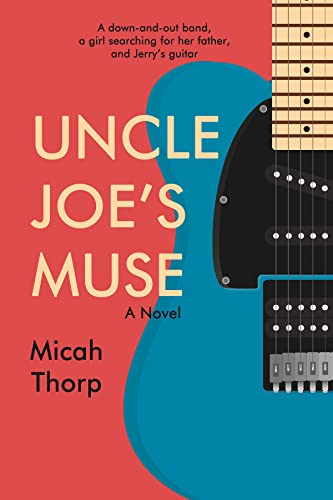
Will: Thank you so much, Micah, for sharing your time, energy, and insights with us. I’ve included a link to Uncle Joe’s Muse below, and encourage my readers to grab a copy now. It’s a perfect accompaniment to that cocktail by the pool! And be sure to look for Uncle Joe’s Senpai when it reaches Amazon’s shelves.
I have the pleasure of introducing to you Alicia Butcher Ehrhardt. Her Amazon page tells us: “A voracious reader, she had always intended to write fiction, and, now retired, dedicates her whole life -when not spending time with her husband, family, and community – to exploring the concepts of integrity in relationships, and the psychological questions of why people do what they do and make the choices they make, including their life partners.”
Alicia writes transcendent prose, defining for me what a contemporary literary novel should be. I simply cannot recommend her books highly enough. In her in-depth interview, she talks candidly about herself and her art.
Will: Alicia, can you tell us something about your writer’s journey? When did you discover you were a writer and had a story to tell?
Alicia: My parents moved us to Mexico City—my next younger sister and me—when I was seven, and I read everything I could get my hands on in English, including about half of The Great Books (Plato was beyond me). And my grandmother, who had graduated from the U. of Illinois and was an English teacher, had these big fat anthologies of English and American Literature full of good stuff—short stories, poetry, novel excerpts. I thought Great Expectations and Huckleberry Finn were children’s stories, and read Shirley Jackson’s The Lottery as a child. Adding my grandparent’s huge collection of National Geographics, my head was filled with well-written material. I didn’t do what many writers have done—write stories.
My English classes at school were basic language classes for my Mexican classmates and I was allowed to read quietly. By twelve, when grownups asked, I had decided I was going to be a Nuclear Physicist, so was considered a bit odd. I followed the science side to a PhD in Nuclear Engineering (plasma physics) from U. Wisconsin-Madison, and ended up working at the Princeton U. Plasma Physics Lab for ten years, until, at a physics conference, I caught a bug, ended up with ME/CFS, and had to stop doing what I loved, computational plasma physics. It turned out to be forever. But I had always planned to write fiction when I retired, so, when our three kids were old enough, I began writing a detective series started in the world of a graduate physics department—with a young Mexican-American engineer as my heroine—when I had a bit of spare energy.
Will: Can you share with us a bit of your creative process? Do you write every day? Do you have a favorite place and time to write?
Alicia: I try to write every day. I sit at the computer most of the day, and, if I have done everything right—sleep, food, no other activities—my brain will focus for a while, and let me get to the next thing on my writing To Do list. I have my own way of measuring brain speed: hard Sudokus. Less than about 6 min. per, the brain is on, I stop futzing about, and get to work. Much more than that, and it’s pointless to try yet. A bad night = no writing the next day. Too much energy expended one day = ditto. Leaving the house = same result, but it usually costs me several days.
Because of this, I’ve developed a very fractal writing process which allows me to focus on single tasks during a writing session, trusting that the results will fit into the next slot in the extremely plotted whole. I trust nothing to memory—it won’t be there when I need it. I create, for each scene, a set of surrounding support files: Production—a journal of my thoughts and decisions as I create a scene; Contents—anything that has been assigned to this scene, from actual snippets of dialogue to fragments of the ancient rough draft that I still like, to the various steps in the Save the Cat (Blake Snyder) or The Key: How to Write Damn Good Fiction Using the Power of Myth (James Frey) or my plotting program DRAMATICA (a screenwriting tool); FIF—a long series of prompts I’ve extracted from The Fire in Fiction (Donald Maass) and other books on writing; and Beats—the skeleton of how I’m going to turn all this material into a scene, the actual events that will occur from some kind of beginning (which includes a section I call Introduction and a deliberately chosen First Line to drag the reader in), through a series of smaller story units I call beats, to a Resolution section with its Last Line chosen to encourage the reader to go on to the next scene or chapter. Scenes typically get 3-4 beats, occasionally as few as a single beat, or a few more.
When all this material has been aggregated, and every prompt answered in writing for this scene, I’m ready to start writing—with the aim of ending up with a scene that is a linked short story along the continuing backbone of the novel. It doesn’t take me that long to gather, but allows me to consider, for example, whether the point of view (pov) character (one of three main characters for the WIP) needs to feel/express anger in this scene, why and how, without worrying at that point exactly how it will appear in the finished scene or how it will be affected by anything else.
Then I assign every piece I’ve gathered to the Introduction, one of the beats, or the Resolution. I call this process atomizing—because I’m working with the smallest pieces of content, and refer to the steps as ‘being in the left brain,’ since that’s what used to be called the logical/mathematical/orderly use. When everything is assigned, I start the actual writing process, living through each of the sections with the pov character, seeing, hearing, thinking, and doing everything strictly from their pov, choosing what they would remember, from right behind the eyeballs—if I were them. That’s the intuitive part, what we used to call the ‘right brain’ part. The material is right there—for a relatively tiny part of the story—and it coalesces into words and images and language, with a sense of pace and sensory detail—because I can hold that much information in my mind at a time. I rarely use dialogue tags, preferring instead to insert a sensory or setting detail, or a direct or indirect thought, into the action and dialogue, aiming for a sense of reality and inevitability.
And I listen. The Mac’s robot voice reads it to me, sometimes hilariously, dragging me into a mini-play, and I work with each section until it does what I wanted it to, smoothly and seamlessly, with attention given to the little details I’ve chosen to include. And I edit as I go: putting sections of the scene through AutoCrit as necessary. I only use AC’s counting functions. It tells me how many times I’ve used a word, a phrase, a cliché. I use this information to edit each section. Then I listen again, and finally, when it feels right and complete, I listen to the whole. It’s not as complicated as it sounds, but not skipping the steps means I don’t find out later that I’ve only used, say, the sense of vision in a scene—because there is a step where I consider prompts for the five main senses plus ESP, proprioceptor (body position) feedback, and a sense of being with other people—or not. And I can do it all with a damaged brain, a story fragment at a time. I haven’t come across any other writer who says, “Oh, yes—I write that way, too.”
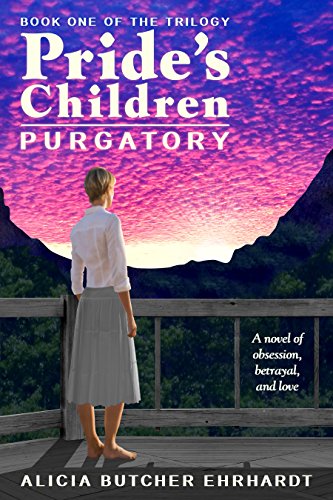
Will: In your trilogy, Pride’s Children, you write with authority about the movie-making business, both in front of and behind the cameras. Pride’s Children: Purgatory introduces us to the rarified air of cinema: movie stars, movie directing, movie production. Is that from research, or do you have some personal experience with the film industry? What was your inspiration for the book?
Alicia: I did some theater acting during prep school, and caught the acting bug. When you’re Queen Elizabeth I in Schiller’s Mary Stuart, Queen of Scots (in Spanish) for months on end, it sticks, living in an alternate world. It wasn’t on my STEM timeline, though I tried a couple of times in college, but I’ve always both liked movies and watching the ‘making of’ documentaries, especially when they started being on the DVD versions. The nuts and bolts—and the eerie effect of the whole as seen by the viewer. The acting classes as an adult were short, but you don’t forget the feeling when the teacher makes the whole class walk around the auditorium yelling obscenities to get over the reluctance.
My writing partner and I took our youngest daughters to an audition in Princeton for A Beautiful Mind, and I asked Ron Howard where would be a good place to watch them filming a scene from, and sat where he indicated. It’s a slow process, but you have time to take a lot of notes. Just having films as an interest brings you random useful stuff through the years, and there is a surfeit of information in articles and interviews online and on YouTube. Books filled many of the gaps. Our Hamilton Public Library had a copy of The Making of Gone With the Wind, a beautiful coffee-table book with hundreds of rare photos.
Some of it, of course, I imagined. Actors and directors are human, and we expect them to give us open and vulnerable portrayals of characters, while we sometimes wonder where a particular piece came from. Pride’s Children was vouchsafed to me in 2000. In one piece. When I had been exposed to several powerful movies, had been sick for years, and had found the ‘billionaire loves a nobody’ kind of romances unbelievable, my mind decided to ask me how a disabled person might possibly end up with one of the world’s most eligible bachelors, a rising star leading man, and filled in the rest of the story. I poked sticks at it for a couple of months, stopped writing the second mystery in my detective series, and started a process which has so far consumed twenty-three years. I didn’t think it would take this long!
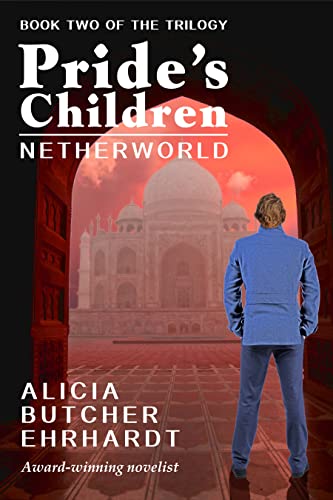
Will: The second book in the trilogy, Pride’s Children: Netherworld, continues the saga of Kary Ashe, Andrew O’Connell, and Bianca Doyle. As an author, you seem to have an uncanny ability to get inside your characters’ heads, exploring not only their emotions, but the motivations for what they do and their layers of self-deceit. How do you do that?
Alicia: I don’t allow a narrator in my stories. So whatever it is that I want to express has to come from the appropriate character in the story. I think of it as writing in third person pov but being the first person narrator of the scene. One of the steps in my Left BRAIN Right method is ‘Gather the feeling of Being this Character’ and includes ‘read previous scenes’ from the character’s pov. It is very helpful because I don’t write many scenes sequentially in the same pov. So for most scenes I have to switch my pov so I can channel a different character, a struggle each time—the three characters are very opinionated. I also insist that anything I write from the character’s pov has to be motivated organically. It must be something the reader would believe the character to think or say in that moment. It is not a place to sneak a narrator/author statement into the story. The characters don’t do things for my convenience. They each talk to themselves differently, and, when I’m them, I’ve trained myself to catch that self-talk. That’s often where the prompts regarding emotions from my FIF file come in useful. I think my mind keeps a short mental checklist for each beat, and nags until I use all the pieces assigned there somehow.
I don’t think of it as uncanny so much as deliberate: if I filled in the prompt ‘Anger,’ with the appropriate reason why the character might feel anger during the beat, the prompt and the writing pulled something out of me because it does belong in the scene, and when I’m moving all those pieces around in my mind for the beat, they snap into each other in a logical (to me) sequence. Like a chain of pop beads. These snippets are all there, there are a finite number of them, and it’s a small-enough number that I can run through the permutations in my head, and write the best order. With the right vocabulary for the character, of course.
In my earlier days as a writer, when I was figuring all this out, there were times when I printed out a scene which wasn’t working, cut it into strips with scissors, one sentence per strip, and rearranged them on my desk until it worked—and then taped them to a piece of paper so I wouldn’t lose that order. I literally compared strips two at a time to find which one was before the other. I called it ‘going back to Kindergarten.’ I couldn’t go to writing classes due to lack of energy, and I didn’t do critique groups mostly for the same reason (and they wanted me to remember several other people’s works-in-progress over weeks and months, something I couldn’t even do with my own!). I had to find my own way, which has been to read many books on craft—tackling small problems such as writing a fight scene again in a tiny piece. Atomizing the task and the skill.
Will: Your protagonist Kary Ashe, former physician turned best-selling author, suffers from Chronic Fatigue Syndrome, a condition that has totally transformed her life. Would you be willing to share with us your own experience with CFS and how it has altered your life and your writing?
Alicia: I became determined somewhere along the way to give a READER the real experience of having to deal with the illness every day, with no breaks and almost no help from the medical profession, to see and feel how the constant calculus of ‘do I have enough energy to do this?’ and ‘how will I function after?’ affects everything they do, and still sometimes doesn’t work. Not as the main point of the story, but from the pov of a character determined not to let an exhausting illness take any more of her energy than absolutely necessary. Many of the little pacing steps Kary uses are things I’ve had to learn. She’s much younger than I am, but back when I was her age, I could do the things she does (like go for a walk or use a wheelchair to save energy in an airport). You learn.
Will: I understand you’re hard at work on the concluding novel of the trilogy. Have you settled on a title for it yet? Can you give us a peek at your work-in-progress?
Alicia: Working (and probably final) title is Pride’s Children: LIMBO. There is a lot in the vernacular about the place where unbaptized children went when they died (thank God the theology no longer believes this), to be happy, but not as happy as they might be in Heaven. It supports the main theme that it’s all, eventually, about the children—and it matters very much who rears them. The prologue to this volume again wrote itself (I have no idea where these pieces come from!), a third chunk of an article in The New Yorker written after the events described by someone who thinks she knows the real story. I can’t guarantee it will stay exactly the same, but they tend to.
Will: Do you have any advice for aspiring authors—what they should attend to, what to disregard, tips for publishing, marketing, getting reviews?
Alicia: My main advice for aspiring authors is to figure out where you are on the spectrum from complete pantser to extreme plotter, and find books and articles and blog posts that are your style. I loved Lawrence Block’s Telling Lies for Fun and Profit, but he’s a pantser, and I can’t write as he does: my structure comes first, and is always undergirding the story. I figure I lost a couple of years in some skills trying to understand why I couldn’t do what he said was so simple. For a rough general rubric: pantsers lose interest in writing the story if they know where it’s going—plotters know exactly where it’s going before they can write it at all.
For publishing: if you do it yourself, there are many skills to learn, but then you know how whether you do it yourself forever or hire someone to do it for you. I did PURGATORY with no help, paid for formatting and cover to the same standards for NETHERWORLD because I had some health problems that required surgery, and I wanted it out before that. I supervised every step, every word, every image—fortunately we are still friends. Join a Facebook writing group, read all the posts. Buy a few inexpensive books—try the steps. There are some shortcuts for some of the steps, like Vellum or Atticus for interior formatting, but they usually cost money. Learn to rigorously self-edit, even if you have an editor at some point—don’t let your initial faults go uncorrected. And do NOT go with a vanity/hybrid publisher—most who do lose a LOT of money, and never write another book. Things keep changing, but publishing paperbacks and hardcovers on Amazon right now can be done with 1) a pdf of the interior of the book, and 2) a pdf using their templates of the cover. There are other methods of input, but I prefer the pdfs because what you send them is exactly what you will see in the published book. For the ebook, send an epub.
Marketing: if you write what a lot of others write, the FB group will give you the conventional wisdom. If you try to write mainstream fiction as an indie, as I do, please let me know when you figure it out (because the traditional publishers think this niche belongs to them). If you want a traditional publishing contract, you have a lot to learn and UNlearn, it is incredibly hard to break into, and doesn’t pay much anymore unless you’re a huge seller. I gave up ‘submitting’ (I hate the term) when my first detective series kept getting nice rejection letters (send us your next book) after a literary agency would sit on it for six months. Educate yourself a lot on many different blogs before making a final choice of what you will try—only self-publishing can be guaranteed to happen if you stick to doing all the steps; traditional acceptance rates are in the low single digits.
Getting reviews is easy (not): put yourself in the position of the reviewer, and talk the reviewer into giving you time, effort, and space. For popular genres, you might be able to follow the trends. For my kind of fiction, only individual, carefully considered appeals have yielded results—and only in about half of the cases I’ve attempted. But the reviews themselves for PURGATORY and NETHERWORLD have been heart-stopping and fulsome. Take a look on the books’ Amazon pages
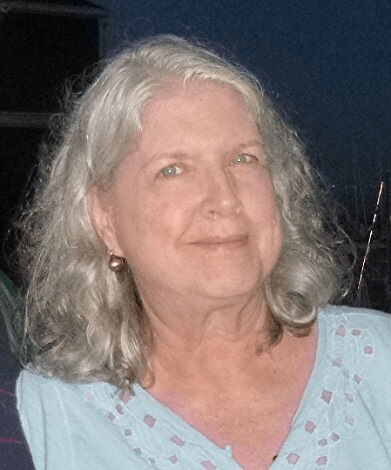
Will: Alicia, I can’t thank you enough for sharing you insights and energy with us. To my readers, here are links to the first two books in her trilogy. Clicking on her image above will bring you to one of her websites.
“She slammed the phone down again. It felt like her life was spiraling out of control. Why had she bothered to call? Was she still atoning for her adolescent crime?”
This tale is another in the author’s series about the small town of Driftwood, Oregon. The story, however, begins a continent away at an art auction in New York. There, readers are introduced to a young woman named Michelle, who will journey from one side of the country to another in an attempt to restart her life, currently plagued by an unseen blackmailer. As Michelle’s story unfolds, so too does the interplay between Volkov, a Russian gangster in Portland, and Whitehorse, a Native American police detective in nearby Driftwood. Previously adversaries, they currently share an odd sort of truce until money laundering, counterfeiting, political influencing, and murder begin to create a toxic mix that simply can’t be ignored.
Author Cook effectively weaves his two narratives together. Eventually, Michelle and Whitehorse are engaged in efforts to not only keep themselves safe from Volkov’s assassins but, in the detective’s case, his wife as well. Continuing characters from previous books in the series are on hand to give a feeling of family to this novel. One of the more appealing players is Chiara, the Driftwood Police dispatcher who is bright, perceptive, and perhaps well on her way to one day becoming a detective herself. On the villain’s team, Kseniya is a stone-cold killer who is as lethal as she is beautiful. Her ability to dispatch individuals with extreme prejudice is matched only by her inability to exhibit any form of emotional involvement with them—until she encounters Michelle.
Author Cook does a first-rate job of mining interpersonal relationships as he’s peeling back the layers of his plot. His depictions of interactions between husbands, wives, and lovers feel honest and real. The people who populate Driftwood are folks readers can enjoy spending time with, particularly as they keep the bad guys at bay.
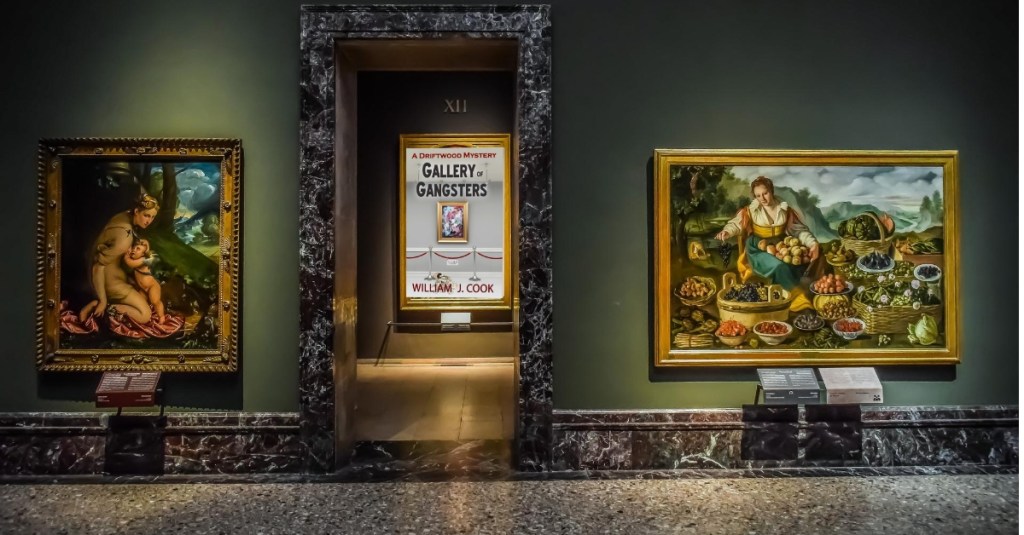
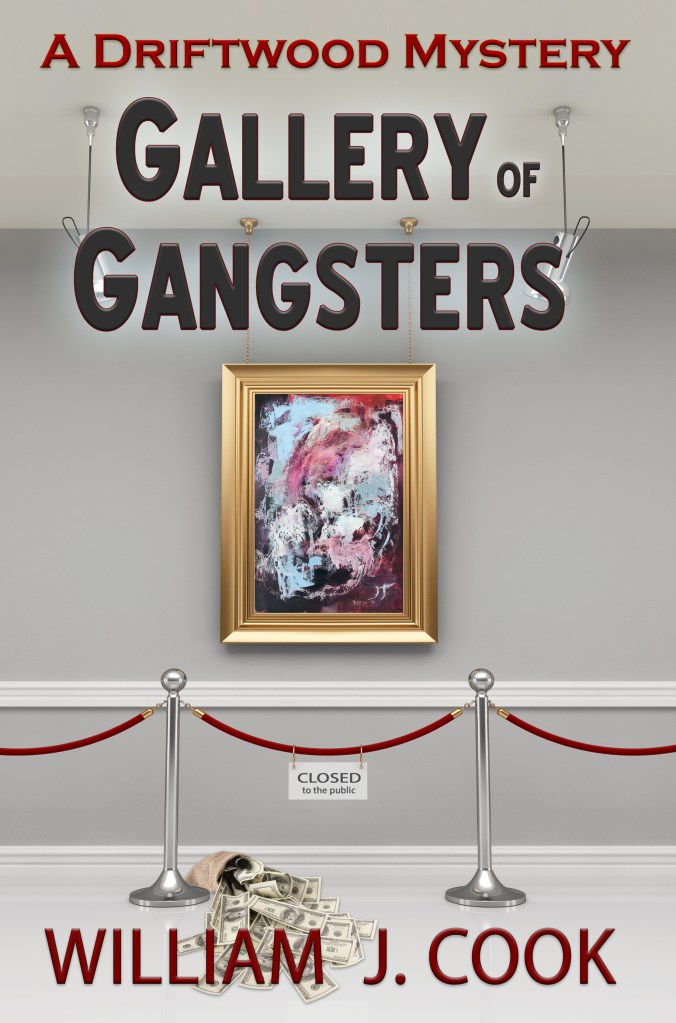
The Kindle edition of Gallery of Gangsters: A Driftwood Mystery will be published on August 24. You can pre-order it by clicking on the image above.
If you click on the image below, you can read the first chapter. It introduces the new character, Michelle Garrison, and begins to weave the tangled web that will engulf all of Driftwood. Be prepared for the final confrontation between Detective Charley Whitehorse and the sinister Vasily Volkov!
From his Amazon Author Page, we learn that Adam was born and raised in Silverton, Oregon, and that he studied abroad for a year in France. Ever since that time, he has been passionate about international travel. He is an avid outdoorsman, enjoying hiking, backpacking, camping, mountain biking, and scuba diving. He is the co-founder of the Northwest Independent Writers Association. Currently, he resides in Vancouver, Washington, where he is an active member of St. Joseph’s Catholic Church.
Will: Adam, how did you come to realize that you’re a writer?
Adam: Even as a child I was told that I was a story teller. I’d come up with the most imaginative stories. As an adolescent, I wanted to see my stories go “big time” as a book or movie, but of course I felt I didn’t have what it took to make that happen. It wasn’t until after college that I seriously gave it a go and wrote the first chapter to my first book. Then the next, then the next. After the book was finished, I felt “accomplished,” but not quite like a writer yet. I knew that no one was ever going to give me permission to be a “writer,” so I just went and made it happen through self-publishing. When I held that first proof in my hand when it arrived in the mail, that is when I realized I had accomplished being not just a writer, but an author.
Will: Can you give us a glimpse of your process? How do you get your ideas? Do you develop an outline first or are you what they sometimes call a “pantser?” How structured are you about your writing—do you have a dedicated space for writing, a dedicated time?
Adam: I’m most definitely a “panster.” My ideas mostly come from the ether. From the muse. Nudged into existence by the inspiration of music, other books, and movies. My last book touches on that where the narrator, a writer, literally sits at a table with his muses and discusses the story being told—and how they quite often push back or admonish him. I have a general idea where the story is going, then it just happens to come together as if it were meant to be. I do, however, really need to reign that in and learn more the art of story and outlining. I’m a binge writer. Usually in 4-hour blocks on a weekend. Usually at a favorite café with comfy couches where the ambient sounds of the café act as white noise.
Will: You have two books in your Tales of Avalon series: Echoes of Avalon and Ripples in the Chalice. Can you tell us about them?
Adam:Echoes of Avalon is my first book and serves as a repository for all the knowledge I accumulated through my life regarding my love for fantasy, mythology, legend, and history. Before school would start, I’d hang out in the library in the mornings just reading encyclopedia articles about anything that had to do with swords, knights, castles, and ancient battles. My father had a similar passion, so our house was full of books, too. The Hobbit was my first adult book that I read. Echoes of Avalon is a love letter to my love of all that. Ripples in the Chalice is its sequel. I often pitched Echoes as “If you could go back in time to witness the actual event that inspired a fairy tale, it would look like this.” Such is the story of a knight in shining armor, charging up a mountain of glass, to rescue a princess in an ivory tower. But since we’re talking about real life here, does the princess want to be rescued? And by him? Ripples in the Chalice isthe follow-up revolving around the consequences of one’s choices, made all the more profound by the involvement of the Holy Grail.
Will: What about your book The Tower?
Adam: When writing Echoes of Avalon, my editor told me my antagonist needed to be more fleshed out; a real person with real motives. So I wrote this novella as a back story to my villain to explain why he is the way he is. The story goes waaaay back to when the progeny of exiled angels passed themselves off as gods with a little “g,” incurring the wrath of God with a big “G” and getting a front row seat to the Great Flood for their troubles.
Will: I confess that I was blown away by your novel Midnight in Silverton: American Gothic. What a strange and wonderful book! And the new audiobook version is extraordinary! What can you tell us about it?
Adam: If Echoes of Avalon and Ripples in the Chalice were love letters to my fascination with fantasy, then Midnight in Silverton was a love letter to my home town and the people there. Echoes is a repository for my life knowledge, Midnight is a repository for my life experience. It was a lifetime in the making, born of a thousand inspirations. From Bradbury, to King, to Hemingway, to…well, just about everyone whose words touched me. It’s very meta, where the reader is along for the ride with a wink. I’d call it a “faux-ography” that draws from my personal life to provide a stage for a murder mystery with supernatural elements. As I mentioned above, the Narrator’s muses guide him while he tries to solve the murder, even though he *might* not want to find out who it is. Though it has elements of Fight Club, Dandelion Wine, Arrival and other great stories, this one’s uniquely all mine.
Will: You are a co-founder of NIWA—the Northwest Independent Writers Association. How did that come about? What should our readers know about NIWA?
Adam: While promoting my first book, I nabbed one of the last spots in the vendor room for Orycon, a sci-fi and fantasy convention in Portland, Oregon. The event organizers asked if I’d mind sharing my spot with another author who had signed up late. I was totally fine with that and that’s how I met Mike Chinakos, author of the wonderfully fun Hollywood Cowboy series (An 80’s metal band that also moonlights as vampire hunters). He noticed that we weren’t the only ones selling self-published books that day and suggested we should all band together and pool our resources. I said, “Ah, heck no, that sounds like a lot of work!” Sigh. It was. But I wouldn’t change it for anything. The friendships and connections I’ve made have been priceless. If I wantreaders to know one thing about NIWA it’s that there are so many great authors right here in your own backyard who deserve a look (C’mon! A hair band that fights vampires! How can you not want to read that?).
Will: Are you working on a new project? Can you give us a peek at it?
Adam: I have an un-published manuscript that has come very close on a couple of occasions to being published with traditional publishers. It’s a WWI vampire/zombie action adventure. I’d like to take a stab at making it into a graphic novel. All my writing is very visual. I basically have a movie projector in my head, and this story isn’t any different and so would lend itself very well to the graphic arts media. In a nutshell: What if, at the height of trench warfare in the First World War, the Germans got so desperate to break the stalemate that they tried lobbing a vampire at the Allies? With a tagline like “A weapon of mass destruction is only as good as your ability to control it” goes a long way to telling you how that plan goes.
Will: Do you have any advice for aspiring independent authors?
Adam: Keep at it. Don’t quit. Write something. Then read something. Then write something else. Repeat. Mostly, just keep at it. I subscribe to Duotrope, which is a website and information-center for places to submit writing to. It keeps track of your submissions. It tells me I submitted a variety of stories over 200 times over several years before I finally got my first “real” acceptance. It didn’t pay much, but the fact the publisher turned my Film Noir Bigfoot creature feature (Incident at Ape Canyon) into a multi-voice cast audio story was well worth it.
Will: Adam, thank you so much for sharing some of your writer’s journey with us. I wish you wonderful success with all your projects.
I live with an artist wife, and Sharon never ceases to amaze me. She enters her studio (formerly, our dining room!) in “paint clothes” (of course, she’d be beautiful even dressed in rags!), starts blending different colors, and confidently approaches her easel armed only with a palette knife. Hours later, she emerges, the cutest smudges of paint on her nose and cheeks, and asks me to take a look at the initial phases of the piece she is birthing. (It seems appropriate that what she is painting on is called a “cradled birch panel.”) Her work staggers me. Here’s her website.
The Oxford Dictionary defines abstract expressionism as a development of abstract art that originated in New York in the 1940s and 1950s and aimed at subjective emotional expression with particular emphasis on the creative spontaneous act. Wikipedia says it put New York City on the map, eclipsing Paris as the new hub of art in the West. I don’t know about all that, I only know my wife’s work knocks my socks off. Here she is:
So why have I’ve called my blog “Art and Crime?” I don’t mean to imply that Sharon is in any way a criminal—far from it! But I write murder mysteries. As I’ve accompanied her to showings at the galleries that feature her work, I’ve learned that art galleries are far and away one of the best places to launder money! Oh, I thought, I can use that! And indeed I have.
Gallery of Gangsters is the final book in the Driftwood series (and one of Sharon’s paintings is on the cover!) If you click on the image below, you can read the first chapter. Let me know what you think.
The book will be released on August 24. Pre-order it now for only $0.99—a $5.00 savings. Here’s the link.
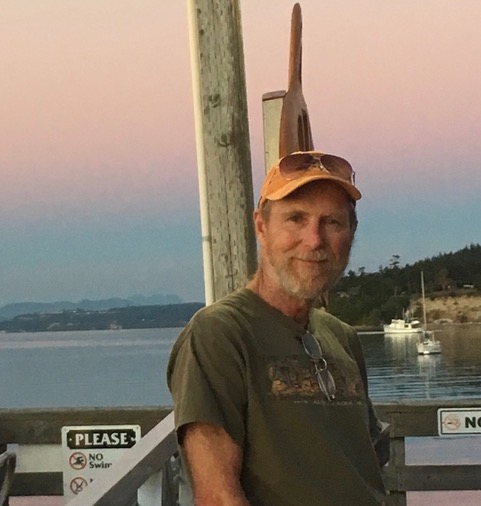
Ron Miner graduated from the University of Rhode Island over 45 years ago with a BA in English. He spent thirty-five of those years as a landscape designer and contractor in Oregon. Continuing to write behind the scenes, he began to assemble a collection of short stories and family history pieces.
In 2011, his father passed away, and the family made some unusual discoveries. A magical trove of artwork, writing, photos, and memorabilia of all shapes and sizes lay dormant among his father’s belongings, giving him a rare insight into what the Second World War in the Pacific theater was really like.
Will: Ron, did you always know you were a writer, or is that something that happened later in your life? What prompted your becoming an author?
Ron: Thanks, Will, for inviting me in for a chat.
In a way, it’s a funny question. I wouldn’t say I excelled at anything in the high school classroom, but science held my interest, and I was told I was pretty good at math. When the dreaded SATs were unleashed my junior year, I scored well in math and miserably in English, enough so, that I was persuaded to take the test a second time as a senior and improved slightly.
In college, I bombed out as a physics major, overwhelmed by organic science, labs, and that abominable calculus with its weird mathematical vocabulary. I dropped most of it before midterm and survived on the remaining three courses that were going much better, one of which was English Literature. So much for SATs.
But an actual writer? No, that wasn’t on my radar then. Yet, using words as I used to use numbers was a pleasant option for meaningful expression, and I kind of took to it. I also found I far preferred writing creatively to slogging through term papers or assignments.
Eventually, I became a landscape designer by trade (one of the other two college courses), and creative writing got away from me for most of the next forty years, other than website development or business-related correspondence. For a while, I considered fashioning a landscape design and construction book with extensive photography and illustrations. Coffee table landscape books were trendy during the 80s and 90s, and our company put together some pretty artistic projects over the years. I just never seemed to find the time to get beyond collecting ideas and project photos and packing them away into various files. The book idea sat on the back burner and the birthdays flew by.
Then something unexpected happened.
I received word that my father had passed away, and it opened my eyes and heart to writing about a subject I had never considered. I was beginning to scale back my landscape operation anyway and started my first book as we headed into the fall and winter of 2011. It was something I’d never experienced before: a convergence of available time, an engaging subject, and extraordinary motivation.
Will: Can you share your writing process with us—how you get from “idea in your head” to “words on a page?”
Ron: It varies. Sometimes an inspiration simply happens. It could come from a book or a movie, perhaps an encounter of some kind on a train or on a hike. A concept jumps out and the juice starts to flow. We’ve all seen a film and said to ourselves, “I wish I’d thought of that.” There are so many storylines that have gone through countless mutations and are unrecognizable as a new piece of fiction. I mean, how many snobs have inherited an old Tuscan winery and then thought they wanted to sell it? However, I think I get the most satisfaction when an arbitrary thought dances through my head, unanticipated and original, and then it hits me! If I’m lucky, I grab a notepad and hammer out a few sentences describing the “it” before it gets away.
I am not a spontaneous writer, blessed with the ability to sit down and effortlessly rattle off prose by the page. It’s more of an exercise for me. Often, I need to move around as I work on the rough draft to explore where certain aspects might be going. In my novel, for instance, I began with the general idea for the ending first.
Once I can pull together enough coherent pages, it takes multiple rewrites before I’d dare let anyone see it. Edit, edit, and so on. Like I say, slow as molasses. In landscape work, I used to tell my crew to stand back and look at what they were doing from a short distance. It’s easy to get too close to your work. In writing, I find that a chapter or essay works far better if I can set it aside for a week or more. Get some distance from it. The next time I have a look, it’s with new eyes. It also helps to have a terrible memory.
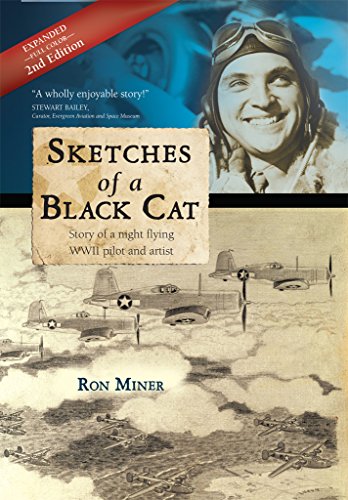
Will: Your first book, Sketches of a Black Cat, is a direct result of your finding “a magical trove of artwork, writing, photos, and memorabilia of all shapes and sizes” left by your father after his passing. That sounds like something from a movie. Can you tell us about the discovery and then how you wove all that material into such a compelling book?
Ron: The Discovery is actually a chapter title because that’s exactly the way it unfolded. My father was typical of many World War II veterans in that he didn’t talk about the war very often with the family. He sometimes shared a funny anecdote or mentioned an old “buddy” who had gotten in touch, but most of the post-war energy for returning servicemen like my father was focused on reentering society, meeting the right girl, raising a family, and starting a career. It was the 50s and the economy was booming due to war-time levels of production. So it was common to put the war stories behind them and move on.
Consequently, I didn’t know much about his World War II experiences. However, I did know my dad was an artistic fellow in a whole host of ways. When I was a young boy, he surprised me one day by showing me the contents of a manilla folder in a file cabinet in our basement. In it were sketches of planes, jungles, and soldiers—wonderful stuff for a kid. He had done them all during the war, much of it in Guadalcanal. I secretly took friends to visit the folder for, I don’t know, a year or so, when I suddenly found the cabinet locked. My dad was on to me. I didn’t see them again as a young man.
When he passed away early in 2011 at 93, we endured several months of confusion and disorder involving his actual status. His second wife was in declining health, difficult to communicate with, and they lived 3000 miles away. It took six months before we could even arrange a service and visit the house.
When we finally made the trip to New England, the house had been empty for years. It would be an understatement to say going through his effects was unpleasant. Rodents of all kinds had been there first. I worried about the condition of his artwork and if it was even there at all. I was thrilled to find it intact, and our search also uncovered another several boxes of notebooks, photos, and keepsakes that I had never seen before. It was a moment filled with electricity, and I suspected his entire wartime story was scattered within these boxes––if I could only piece the puzzle together.
It began with the artwork. I decided on a creative design for the book, using a sketch or painting to begin each chapter. My landscape office became the bunker, with writing, photos, graphics, maps, and research materials stacked about like a 1940s police detective’s room. I read his writing, journals, logbooks, and official Navy War Diary. There was a collection of magazine articles, letters written home, and hundreds of black and white photos, many with descriptions on the back. I decided to use the outstanding graphics throughout the book as part of the narrative.
I connected with a talented artist and book designer, Anneli Anderson (StudioAnneli), who took my rough layout, text, and assorted materials to heart and gave the book an inventive, scrapbook appearance. Our collaboration has continued now for two books and second editions. Initially, Sketches of a Black Cat was only available in full color, but the cost for self-publishing in color was somewhat prohibitive. We decided to release a black and white and later, an ebook, along with the collector’s edition in full color.
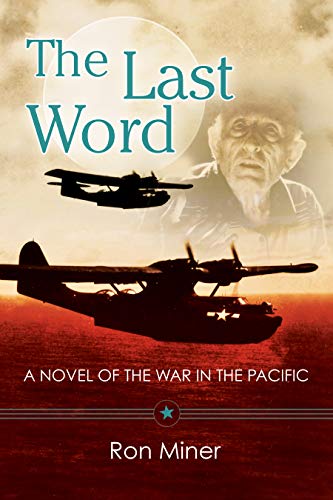
Will: Is it fair to say that your second book, The Last Word, is the result of the reception BlackCat got? I know that although The Last Word is a novel, it is based on actual events and anecdotes you compiled by interviewing ten World War II veterans and painstakingly recording their stories. Can you tell us about that fascinating process?
Ron: Imagine, for a moment, that you’re a journalist with an assignment in the year 2038. It’s an interview with an old man––a very old man. And he fought in World War II.
The Last Word is the unquestionable by-product of Sketches of a Black Cat. My initial opportunity for a real interview with a World War II veteran came in 2013. As luck would have it, he had read a brief snippet in the paper about my initial book launch at a small, local college. He walked up forty stairs using a cane, waited in line with a newly minted book under his arm, and promptly handed me a photo of my father, picturing the two of them at a squadron reunion together. I still get goose bumps when I recall his words: “I knew and flew with your father.”
His was the first of nearly a dozen videotaped interactions with men who were members of a night flying Navy squadron that also included my father. Dad, indeed, had left behind a trove of writing, memorabilia, and documentation about his adventures as a part of this little-known group of flyers, but I had published the book after his death, and there were many unanswered questions. With the opportunity to speak to his colleagues came a reprieve, a second chance to ask them about the things I could never ask him. As the book caught on, I continued to film interviews with veterans up and down the West Coast. I developed friendships and accumulated priceless narratives. They told me stories with humor, sincerity, and tears––stories that begged for an audience. By 2018, I knew it was time for a new book.
There was another influence. A big one. This wonderful group of ninety-somethings who had so graciously invited me into their homes were passing away. I was attending funerals and losing friends. I found myself wondering, How long will it be before they are all gone?And beyond that,someday in the not-so-distant future, this process will play itself out until the last veteran in all of World War II surrenders to time.
It suddenly occurred to me that I should create that individual now.
I again put pencil to paper (OK, fingers to keyboard), and started developing a novel, my first attempt at historical fiction. I was a reasonably experienced interviewer by then, had a wonderful assortment of compelling tales to draw from, and a pretty good notion of what my last World War II veteran might like to say on behalf of his comrades, given the chance. His personality grew into a composite of all the gentlemen that I’d interviewed, his mind filled with memories of skies above vast, unexplored regions, expansive seas between tiny specks of Pacific coral, and the nostalgia borne from well over a hundred years of living. While my fictitious character recounts his story in 2038, it becomes a way of emphasizing how fragile––how finite––the World War II generation and their in-person accounts are today.
Will: Your works are a glowing tribute to “The Greatest Generation,” and I understand that you are still involved with these heroes. What are some of your ongoing projects on behalf of Black Cats and World War II veterans?
Ron: I’ve had numerous meetings with museum curators and staff trying to develop exhibits that would showcase the Black Cat squadron, whose legacy is still one of the least known to come out of World War II. I then began to develop a documentary using the footage from interviews and the collection of photos and video from my library. I got as far as an eleven-minute trailer available on Youtube, which I’ve also given to museums and use for presentations. Movie making is a lot of work!
I’ve reeled in some of the more ambitious projects, and now try to promote the books and use Facebook as a forum, blog, and communication tool of sorts. Some of my ads continue to cast the net for squadron members, hoping to connect with a few more on the West Coast, but time is not on our side. I’ve launched a new post called “Help Me Tell Their Stories” that I hope will be a platform for families of World War II veterans who might wish to furnish accounts that may never find their way into print, so that I can compose and share them with readers of my posts.
Will: Can you tell us what the self-publishing process has been like for you? Unlike novels which are plain text, your books have photographs, maps, drawings, all of which make them exponentially more difficult to manage. How did you do it? Do you have advice for other indie authors who may be daunted by all that?
Ron: Self-publishing has been a mixed bag. I enrolled in a self-publishing seminar as I was working on my first manuscript. I ended up showing a few chapters to the instructor over lunch, using the complication of artwork and graphics as a ruse to get him to look at it. I was shocked when he smiled and started passing chapters around the table. This instructor became a wonderful advocate and encouraged me to self-publish, describing it as the wave of the future. So, I tried it.
The print book was high-resolution and the file was huge. Reducing resolution very much made some of the images on the Kindle file blurred or otherwise garbled. The file size added a lot to Amazon’s delivery cost, and to the selling price of the ebook. The layout, including fonts, drop caps, and the images in both booksis pretty complicated, especially Sketches. Things can also move around depending on the device and often escape from where they were intended. I think some of this might have been avoided with a conventional publisher.
Overall, I am very pleased with the quality of the print books and the publishing-on-demand aspect works for me. I was relieved not to be saddled with a garage full of books.
I seriously considered conventional publishing with The Last Word, and at times, still wish I had gone that route. I felt this was a truly unusual storyline and wanted it to have the widest possible audience. However, it was somewhat time-sensitive, in that it presupposes a date in the near future and was inspired by interviews with elderly people who I hoped to share it with. I was afraid to wait the two years it might take to get through the publishing process. Of course, now, we are beyond that anyway.
I depended on a pro to help with the formatting and setup. I would have had no idea how to create a master file like the ones for Sketches or The Last Word. In fact, it was tricky for Anneli at times, but I like to say that she not only pulled it off, she added the sparkle.
This process definitely adds a layer of cost and carries some risk if you find the book doesn’t sell. In my case, I was determined to tell my father’s story. I looked at it as an expenditure I might make for a vacation or favorite pastime, as something that I wanted to do and not as an investment. The fact that the book has been relatively successful for a self-published book is both unexpected and gratifying.
You never know.
Will: What can we expect from your next project? Can you share a behind-the-scenes peek with us?
Ron: I’m currently working on a local history project about a small Oregon community founded in the mid-1800s. The early pioneers are fascinating individuals, and to dig into the lives of folks whose names adorn street signs and creeks today is quite an experience.
For me, non-fiction is tough. Sometimes I find I’ve been working all morning and have a single, tangled up paragraph to show for it. Research is time-consuming and distracting, partly because it’s interesting. I find I now prefer fiction, and especially historical fiction. That way, if you really get stuck, you can just make it up.
I enjoy short story writing and will probably bundle together a collection at some point. I also think I’m old enough to be thinking about that memoir. If not now, when? If you wait too long, you might lose the ability to do it, and if you do it too soon, you might miss the best thing you ever did.
I think you should relive your life in prose while you can and see if you can determine what that gleam in your parents’ eyes amounted to. Hey, at least someday they’ll have something to use for your obit.
Will: Ron, thank you so much for sharing your fascinating “writer’s journey” with us. This has been a real joy.
This month, I am interviewing USA Today Best-Selling Author April Aasheim. Her Amazon page describes her as an avid reader and researcher, an amateur ghost hunter, an author of witchy things, and a believer in all things magick. She lives in Portland, Oregon, with her family and her familiar, Boots the Cat.
Will: April, you are arguably one of the most successful indie authors on the West Coast, if not in the country. If I’ve counted correctly, you have five series out there, with more on the way, I presume. The first book of your juggernaut series, The Daughters of DarkRoot, has 1123 reviews on Amazon the last time I looked. What’s the secret to your success?
April: Thank you for that kind introduction.
As for my success, I used to think it was just marketing, and then nurturing your readership. Get eyes on your book and it will be read. But I now know that’s not entirely true. That’s only a few pieces of the puzzle. My Dark Root series do sell well. But when I wrote my Alchemy of a Witch series, which took place in another time with different characters, my readers didn’t all follow. (Even though I love this series).
So, I think the real secret to success is to just write. Write from the heart. Connect with people. Bring them into your world. My first book took 18 months to write, and I put my heart and soul in it. People responded. I still get emails and messages telling me how much my books meant to them. If you can get a reader to feel something, they’re going to remember you. The marketing only works if you have a product people want to buy.
Will: When did you first realize you were a writer? Can you give us a glimpse of your process?
April: I knew in first grade. I just knew. The teachers would always ask what we wanted to be and I’d always say, a novelist.
As for my process, the first thing is to sit down and write. I dedicate most every day, 9-11:30, Monday through Friday, to writing, rain or shine. This has taken a toll on my personal relationships at times, but it was important to me, and if something is important you find a way to do it. I also write most nights for an hour. One thing I am working on in 2022 is more balance. I’ve written 18 books now, and I think I’m ready to try other things too.
When I sit down to write, I first close my eyes and decide what must come in the scene. Then I just let my imagination go and it usually comes to me. Once you shut your brain off, your imagination can run wild. As soon as I’ve ‘seen’ the scene, I open my laptop and write it out as quick as I can, then fix it later. I notice when I don’t meditate first, it’s much harder to work out the scene.
Will: Not long after I started to read The Daughters of Dark Root, it occurred to me that although there’s plenty of paranormal stuff going on, that just serves as the backdrop or context for a saga of family relationships—mother/daughter, sister/sister—as well as a story of the growing independence and empowerment of a young woman. What was your inspiration for that series?
April: I had moved from Arizona to Portland, and was missing my siblings at the time, and I was nostalgic for our childhood. When you have siblings, especially as many as I have (5!) there is going to be drama. But through everything, love. So, a lot of the characters were drawn from my own sisters—at least pieces of them. And of course, a lot of the main character, Maggie, was drawn from my own tempestuous youth.
Miss Sasha, the matriarch and coven leader of the council, was based on my own mom. I’ve always had a complex relationship with my mother—who was a free-spirited, witchy woman who read tarot cards and removed curses. She was mostly ‘love and light,’ but had a dark side, too. One of the scenes in The Witches of Dark Root finds Maggie trapped in a dark room with a spirit, and Maggie is terrified. That came directly from childhood. I was afraid of ghosts and my mom thought the best way to get me over it was to put me in a dark room until I wasn’t afraid. It backfired. And to this day, I sleep with a nightlight. Writers often put their trauma into stories. That’s how we cope. Still, I loved and admired my mother until the day she died last fall. And she gave me plenty of writing material.
Will: Can you tell us about some of your other books? Do you have any favorites?
April: I absolutely love the Alchemy of a Witch series. I decided spontaneously to write a medieval witchy series set during the plague and witch hunts. As luck, or misfortune would have it, a few weeks after I started writing the first book, COVID hit. And so, I was experiencing the world of fear and suspicion, right along with my main character.
The story is an epic tale of a woman fleeing her village when the Witch Hunter General accuses her and her mother of starting the plague. During her travels, she meets an alchemist, who teaches her the ways of magick and transmutation. Later, she meets a priestess, a hedge witch, and a shapeshifter. And through these encounters learns more about magick and herself.
The research for this series was intense. I learned that alchemists were not only real, but there were many of them, including Paracelsus and Isaac Newton. Some even worked for kings. They worked to turn lead into gold, and to find eternal life. Most had to labor in secret, and write their recipes in code, for fear of being labeled a heretic or a sorcerer, and hung.
The book became bigger as the research grew, and one book turned into four. I love how the story turned out, and I adore the characters. Now, I’m obsessed with alchemy.
Will: You’ve told us you recently lost your mother. If it’s not too personal, can you share how that has impacted your creativity?
April: Thank you for that thoughtful question.
Well, my mom did provide me lots of writing material. She took me on adventures as a kid not many others got to experience. We were on the carnival circuit for several years, lived in a ghost town, and even a taco truck. And now that she’s gone the world seems a bit less colorful.
Luckily, I take my pain and write through it, and that’s where some of my best scenes come. And also understanding. I miss her every day, but she was my biggest fan, and I know she’d want me to keep writing. As a final gift to me, she left a review on my book The Good Girl’s Guide to Being a Demon, just a few weeks before she passed. And I didn’t find out until afterwards.
I believe my mom is here with me, and though I would give anything to have one more day with her, her presence is too big to be doused by her death. And now I feel freer to write my memoire, which I’ve always wanted to do, but wasn’t sure I could without hurting her.
Will: Marketing books well requires a whole different set of skills from writing good books, and for an indie author, that can be quite daunting. What methods of promoting your works have you found to be the most successful?
April: It changes yearly, if not weekly, haha.
Social media of course. I’m trying TikTok now, but it’s a challenge for me to keep up. Facebook worked for a while, and Twitter does sometime. There are also places you can promote your books for a fee, but I recommend waiting until you have a few books before you pay for that.
Network with other authors in similar genres. Do projects with them, like anthologies or signings. Do newsletter swaps and giveaways with them. Other writers are not your rivals. A book may take a week to read but a year to write, so your readers will need something else to keep them occupied until your next book comes out.
Will: Do you have any advice you would like to share with other indie writers?
April: Write from your heart. Invest in nice covers. Network with fellow writers. Develop a thick skin. Take feedback from bad reviews, but don’t let them cripple you. Savor the good reviews. This is a world of ups and downs. Some days you sell, others you may not. Love your books, whether others do or not. They are a piece of yourself.
Will: April, thank you so much for taking the time to share your experiences with us. You’ve given us a lot to think about!
For my readers who would like to know more about April and her books, click here to go to her website.






 William J. Cook